Intel Xeon Platinum 8480+ 56c/112t 2.0GHz-3.8GHz 350W (PK8071305074801)
P/N: PK8071305074801
3 217€ (inc. VAT (Spain))
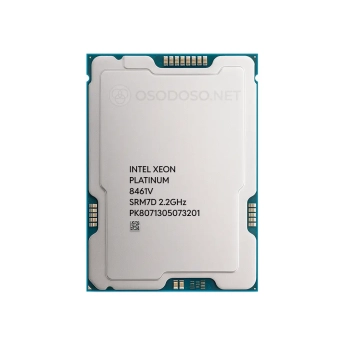
New
Our specialist will help you choose the right server components and ensure full compatibility with your system.
Showing 223 products.
P/N: PK8071305074801
3 217€ (inc. VAT (Spain))
P/N: PK8071305126800
1 709€ (inc. VAT (Spain))
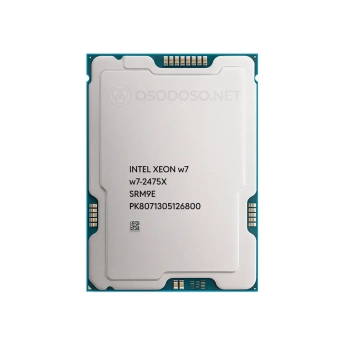
P/N: PK8072205512300
3 508€ (inc. VAT (Spain))
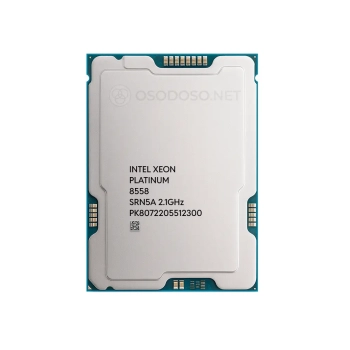
P/N: SRKHD
1 476€ (inc. VAT (Spain))
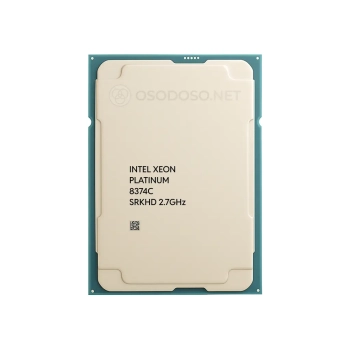
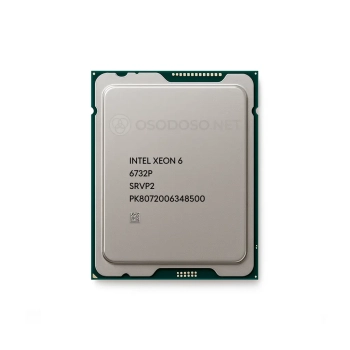
P/N: PK8072006348500
5 422€ (inc. VAT (Spain))
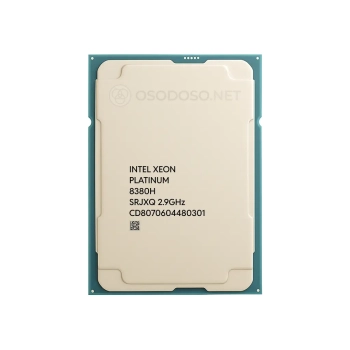
P/N: CD8070604480301
4 610€ (inc. VAT (Spain))
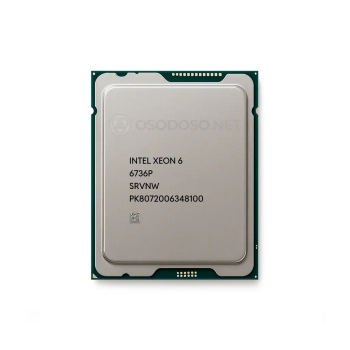
P/N: PK8072006348100
3 682€ (inc. VAT (Spain))
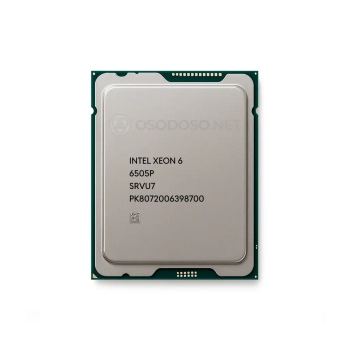
P/N: PK8072006398700
721€ (inc. VAT (Spain))
P/N: PK8072006348400
4 842€ (inc. VAT (Spain))
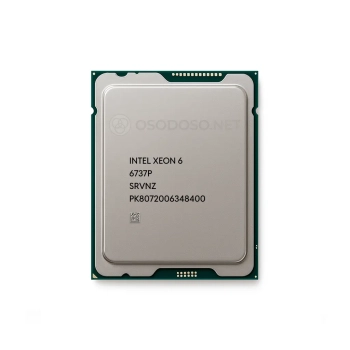
P/N: PK8072006398500
989€ (inc. VAT (Spain))
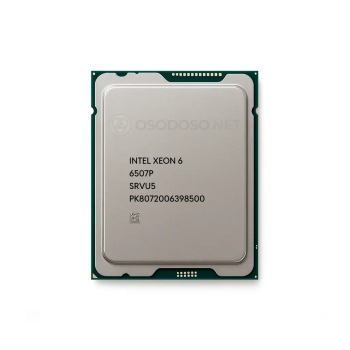
P/N: PK8072006246300
7 163€ (inc. VAT (Spain))
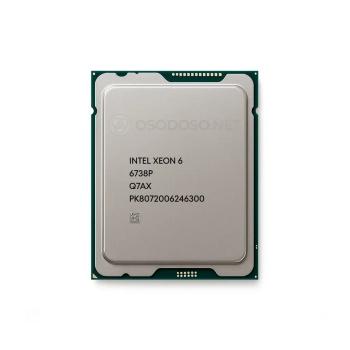
P/N: PK8072006398801
1 198€ (inc. VAT (Spain))
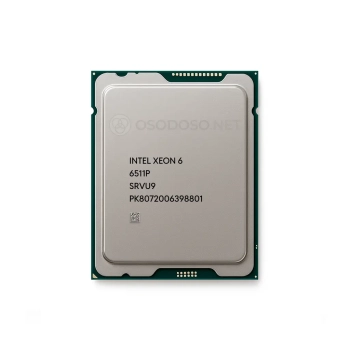
Intel is one of the most established providers of server-class and workstation-class CPUs, with product lines that cover everything from small business servers to large enterprise clusters and high-performance computing. The Intel Xeon family is built around consistency, predictable throughput, broad software compatibility, and long market availability — qualities that matter for companies planning stable infrastructure or long-term workstation use.
The current Xeon ecosystem consists of several clearly defined tiers. Xeon Scalable processors — Silver, Gold, and Platinum — form the backbone of modern enterprise servers and virtualized environments. Xeon E represents compact, cost-efficient one-socket systems for small businesses and edge deployments. Xeon W is tailored for professional workstations used in engineering and content creation. Xeon Max targets advanced scientific workloads thanks to memory-on-package technologies. Together, these lines give buyers a clear path for selecting a CPU that fits their performance and scalability requirements.
The Xeon Scalable family is designed for multi-socket servers, virtualization clusters, cloud computing, storage solutions, and enterprise applications requiring predictable compute density. Silver CPUs focus on essential performance for general business servers, offering balanced core counts, moderate frequencies, and full ECC support. Gold models extend these capabilities with higher frequencies, more cores, increased memory bandwidth, and enhanced reliability features suitable for larger databases, virtualized workloads, and mixed-use environments. Platinum processors represent the top tier and are used in mission-critical systems, multi-node clusters, and scenarios requiring maximum scalability with multiple CPU sockets and high memory capacity.
These processors typically support large numbers of PCIe lanes (Gen4 or Gen5 depending on generation), significant L3 cache pools, and advanced RAS features that help maintain uptime in workloads operating around the clock.
Xeon E processors serve small and medium businesses looking for a dedicated, reliable server CPU without the complexity of a multi-socket platform. These chips offer strong single-thread performance, ECC UDIMM support, and modest power consumption, making them suitable for NAS systems, edge computing, small virtualization nodes, backup servers, and office infrastructure.
Their simplicity is often an advantage: single-socket motherboards, standard cooling, and a cost-efficient platform allow companies to configure a robust server with predictable performance and minimal maintenance requirements.
Xeon W processors are engineered for desktop workstations used in CAD, CAE, BIM, media production, architecture, simulation, and software development. They offer high core counts, fast clock speeds, large caches, and generous PCIe connectivity for multi-GPU or high-bandwidth storage setups. The platform is available in performance tiers such as w3, w5, w7, and w9 — each representing a step up in capability. Higher-end Xeon W models support extensive memory capacities and are often chosen for engineering studios, post-production environments, and R&D workflows where predictable performance and certified drivers matter.
Compared to consumer CPUs, Xeon W focuses on system stability, ECC memory support, and long platform life cycles, making it ideal for professional workflows where reliability is more important than peak gaming performance.
Xeon Max processors combine traditional Xeon cores with high-bandwidth HBM2e memory integrated directly on the package. This design dramatically increases memory throughput compared to standard DDR platforms and is highly effective for simulations, climate modeling, scientific analysis, and HPC workloads that are sensitive to memory bandwidth.
For organizations running tightly optimized high-performance workloads, Xeon Max provides a powerful upgrade path with minimal changes to existing x86-based software environments.
Each Xeon line is built for a specific type of deployment. Xeon Scalable processors are ideal for data centers, multi-tenant virtualization, enterprise databases, cloud infrastructure, analytics, and any environment requiring large memory pools and scalable compute. Xeon E is best suited for small servers, office systems, edge devices, testing environments, lightweight virtual machines, and home-lab configurations requiring enterprise reliability. Xeon W provides workstation-grade compute power for businesses working in design, engineering, rendering, VFX, and development. Xeon Max offers specialized performance for HPC workloads where memory bandwidth is a critical bottleneck.
This segmentation helps customers quickly determine which category meets their technical requirements and future growth plans.
When selecting a Xeon CPU, buyers typically evaluate factors such as core count, single-thread speed, memory type and number of channels, PCIe version and lane count, power consumption, cooling design, compatibility with existing platforms, and scaling requirements between single-socket and multi-socket systems. Understanding these parameters ensures an optimal match between workload demands and processor capabilities, improving system longevity and lowering total cost of ownership.
Silver covers essential server tasks, Gold adds higher performance and broader scalability, and Platinum is used in mission-critical environments requiring maximum memory capacity and multi-socket configurations.
Yes. Xeon E provides stable single-socket performance with ECC memory support and low power consumption, making it ideal for small servers and office infrastructure.
Yes. ECC support is a core feature of the Intel Xeon product line.
Xeon Max integrates high-bandwidth HBM memory directly on the CPU, significantly improving performance in scientific and HPC workloads.
Xeon W is recommended for professional workstations in engineering, simulation, rendering, and creative workflows where certified drivers and predictable compute performance are essential.