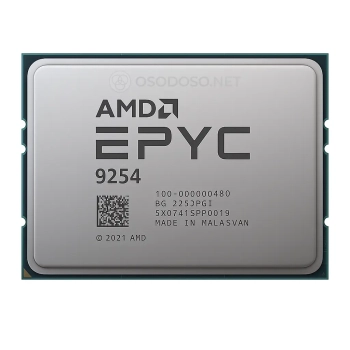
AMD EPYC 9254 24c/48t 2.9GHz-4.15GHz 200W (100-000000480)
P/N: 100-000000480
1 705€ (inc. VAT (Spain))
New
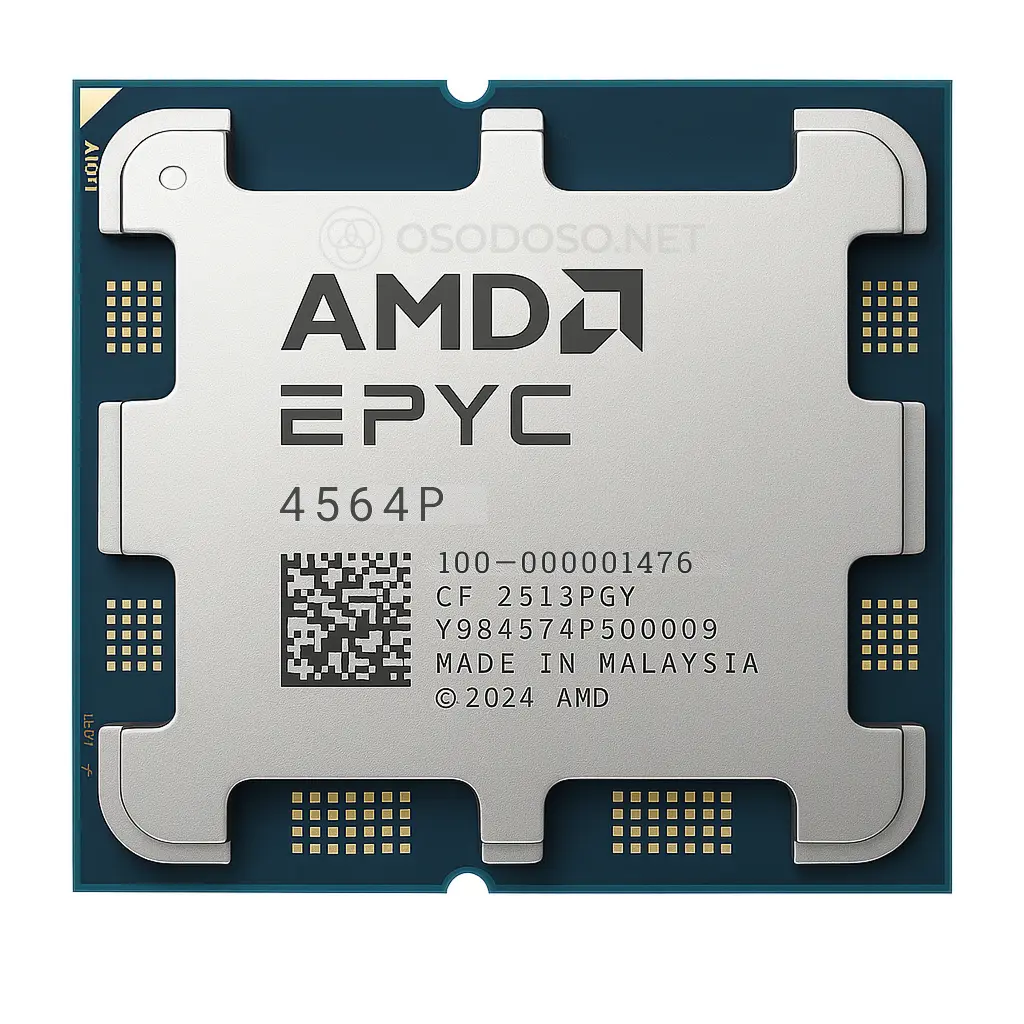
P/N: 100-000001476
813€ (inc. VAT (Spain))
Delivery is made within 3-7 days
This is an estimated timeframe. Delivery times may vary depending on logistics and stock availability.
Warranty 2 year
The product is covered by the manufacturer’s standard warranty.
In stock
Guaranteed Safe Checkout:

AMD EPYC 4564P 16-core high-frequency server CPU with fast EU delivery and worldwide shipping. Official warranty included.
Our specialist will help you choose the right server components and ensure full compatibility with your system.
| Dimensions | 17 × 17 × 10 cm |
|---|---|
| Country of manufacture | Taiwan |
| Manufacturer's warranty (years) | 1 |
| Series | EPYC |
| Number of cores | 16 |
| Number of threads | 32 |
| Clock frequency (GHz) | 4.5 |
| Cache L3 (MB) | 64 |
| Cache L2 (MB) | 1 |
| Cache L1 (KB) | 64 |
| Process technology (nm) | 5 |
| Maximum Turbo Frequency (GHz) | 5.7 |
| Memory type | DDR5 |
| Maximum memory channels | 2 |
| Maximum memory frequency (MHz) | 5200 |
| Heat dissipation TDP (W) | 170 |
| PCI Express controller | PCIE 5.0 |
| Number of PCI Express lanes | 28 |
| Processors on a motherboard | 1 |
| Length (cm) | 17 |
| Width (cm) | 17 |
| SKU | 100-100001476WOF |
| Architecture | Zen 4 |
| Socket | AM5 |
The AMD EPYC 4564P is a 16-core, 32-thread single-socket server processor built on the Zen 4 “Raphael” architecture. Unlike mainstream EPYC parts that focus on high core density and multi-socket scalability, the 4564P is designed to maximize per-core performance, low-latency responsiveness and frequency-driven throughput for modern cloud and edge workloads. With a 4.5 GHz base clock and boost frequencies up to 5.7 GHz, it delivers some of the highest single-thread performance available in the server space.
Architectural positioning and platform role
The EPYC 4564P occupies a distinct position in AMD’s server stack. It uses the AM5 platform instead of the SP5 infrastructure used by Genoa and Turin, which simplifies system design and enables more compact, power-efficient servers. The “P” suffix indicates optimization for single-socket configurations, making the 4564P an ideal choice for deployments where adding more sockets does not provide proportional benefits.
Rather than targeting the maximum number of cores, the processor is tuned for high clock speeds, fast cache access and consistent per-core behavior. In practice, this moves it into a segment closer to high-frequency Xeon E and W-series CPUs or specialized cloud “high-frequency” instances, but with the reliability, ECC support and 24/7 duty-cycle characteristics expected from the EPYC family.
Workload suitability and real-world scenarios
The strength of the EPYC 4564P lies in workloads where latency and single-thread responsiveness dominate overall performance. Typical scenarios include:
Memory and I/O characteristics
The EPYC 4564P supports dual-channel DDR5 memory up to 5200 MT/s. While this is a smaller memory subsystem than SP5-based EPYC CPUs with 8 or 12 channels, for the kinds of frequency-oriented workloads it targets, memory bandwidth is rarely the primary bottleneck. In many latency-sensitive and networking-focused applications, cache behavior and clock speed have a greater impact on real-world performance than raw memory channel count.
The CPU exposes 28 PCIe 5.0 lanes, enabling high-speed connectivity for NVMe SSDs, 25/40/100 GbE network adapters, SmartNICs and accelerator cards. Although this is fewer lanes than large SP5 EPYC processors provide, it is sufficient for the typical single-socket, high-frequency servers the 4564P is meant for, especially in edge and micro-datacenter environments where chassis size and power limits constrain expansion anyway.
Performance perspective versus SP5 “big EPYC”
Compared to SP5-based EPYC processors such as Genoa and Bergamo, the 4564P trades core count and memory capacity for higher per-core performance and lower latency. It offers:
In return, it does not attempt to compete in maximum throughput for large databases, HPC, or heavy offline analytics—areas where 64–128 core EPYC Genoa or Turin SKUs remain more suitable.
Deployment strategy and ideal users
The AMD EPYC 4564P fits best in environments where performance per core is more important than performance per socket. It is well-suited for organizations that:
Summary
The AMD EPYC 4564P is a specialized but highly relevant processor for modern, latency-sensitive workloads. It combines server-grade reliability, ECC memory support and PCIe 5.0 connectivity with extremely high clock speeds and strong single-threaded performance. For trading systems, high-performance web services, microservice platforms, JVM-based stacks and real-time data pipelines that cannot efficiently exploit very high core counts, the EPYC 4564P offers a compelling balance of performance, efficiency and simplicity in a single-socket design.
Only logged in customers who have purchased this product may leave a review.
Fast and reliable delivery across the European Union
Estimated transit time: 3–7 days from order confirmation. Worldwide shipping is available for customers outside the EU.
All orders are processed within 24 hours after confirmation. Tracking information is provided as soon as the parcel leaves our logistics center.
Multiple Secure Payment Methods
We accept: Visa, MasterCard, PayPal, Bank Transfer, Klarna, Stripe, Revolut Pay, Google Pay, Apple Pay, and USDT (TRC20) cryptocurrency payments.
All transactions are encrypted and processed via certified payment gateways for your security.
Additional Notes
P/N: 100-000000480
1 705€ (inc. VAT (Spain))
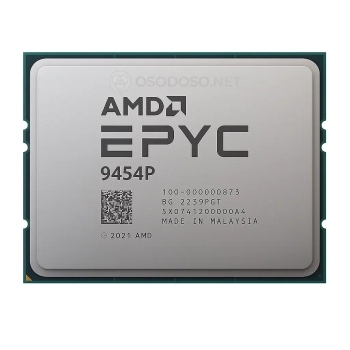
P/N: 100-000000873
2 110€ (inc. VAT (Spain))
P/N: 100-000000329
686€ (inc. VAT (Spain))
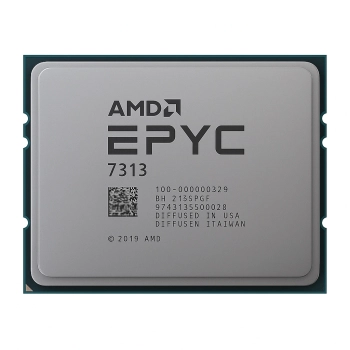
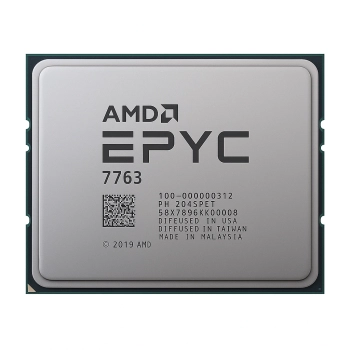
P/N: 100-000000312
1 241€ (inc. VAT (Spain))
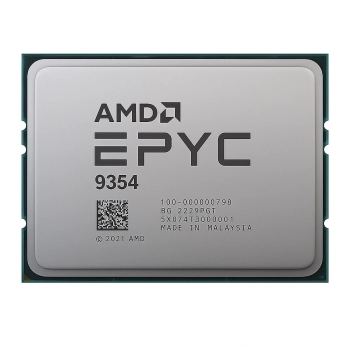
P/N: 100-000000798
1 937€ (inc. VAT (Spain))
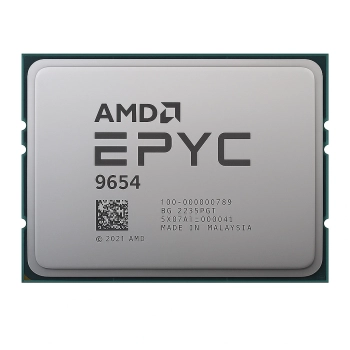
P/N: 100-000000789
3 442€ (inc. VAT (Spain))
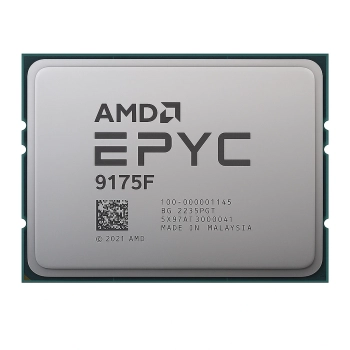
P/N: 100-000001145
3 674€ (inc. VAT (Spain))
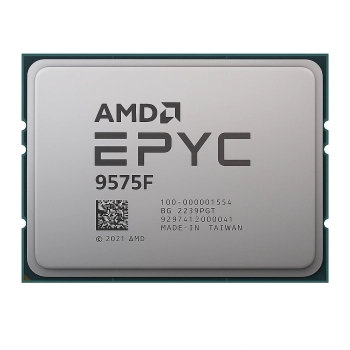
P/N: 100-000001554
5 642€ (inc. VAT (Spain))
Reviews
There are no reviews yet.