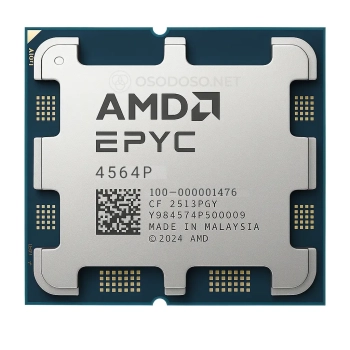
AMD EPYC 4564P 16c/32t 4.5GHz-5.7GHz 170W (100-000001476)
P/N: 100-000001476
813€ (inc. VAT (Spain))
New
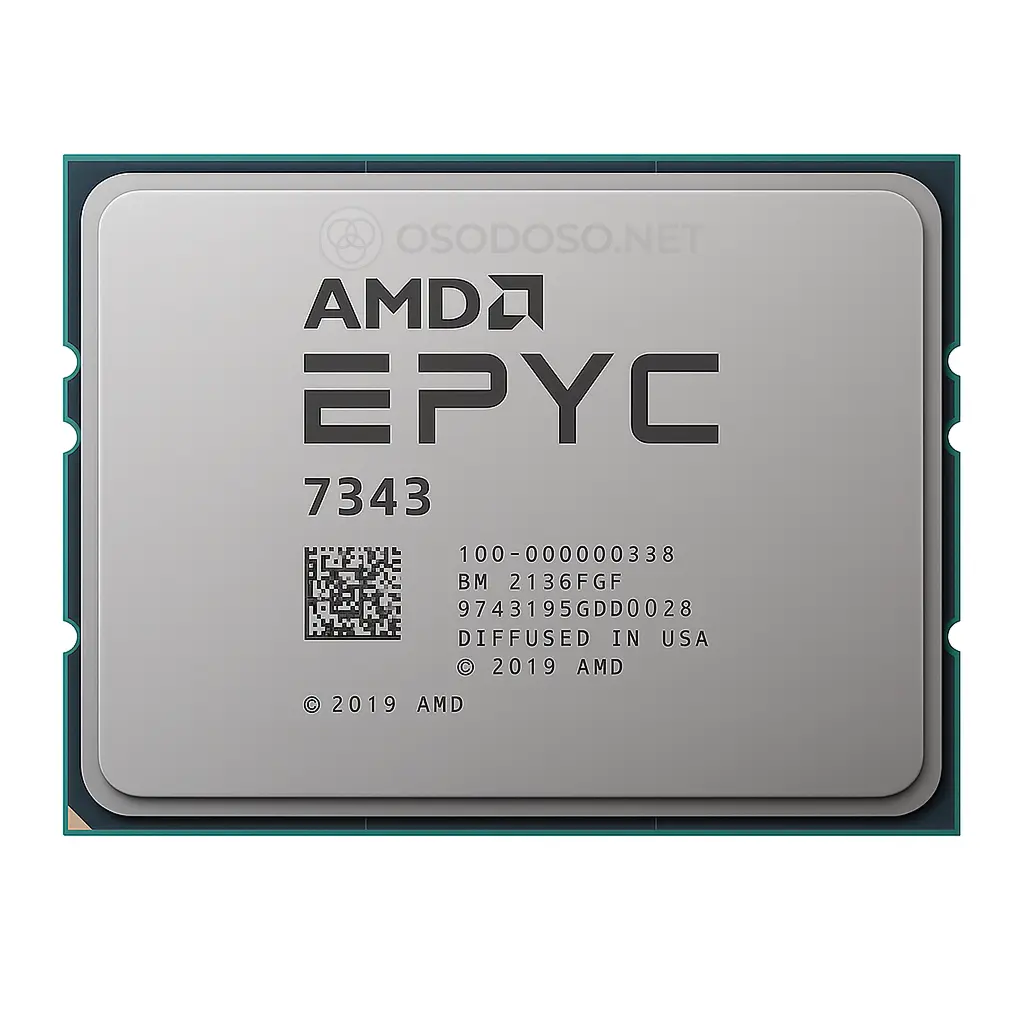
P/N: 100-000000338
686€ (inc. VAT (Spain))
Delivery is made within 3-7 days
This is an estimated timeframe. Delivery times may vary depending on logistics and stock availability.
Warranty 2 year
The product is covered by the manufacturer’s standard warranty.
In stock
Guaranteed Safe Checkout:

AMD EPYC 7343 16-core Milan CPU with fast EU delivery and worldwide shipping. Official warranty included.
Our specialist will help you choose the right server components and ensure full compatibility with your system.
| Dimensions | 17 × 17 × 10 cm |
|---|---|
| Country of manufacture | Taiwan |
| Manufacturer's warranty (years) | 1 |
| Series | EPYC |
| Number of cores | 16 |
| Number of threads | 32 |
| Clock frequency (GHz) | 3.2 |
| Cache L3 (MB) | 128 |
| Process technology (nm) | 7 |
| Maximum Turbo Frequency (GHz) | 3.9 |
| Memory type | DDR4 |
| Maximum memory channels | 8 |
| Maximum memory frequency (MHz) | 3200 |
| Heat dissipation TDP (W) | 190 |
| PCI Express controller | PCIE 4.0 |
| Number of PCI Express lanes | 128 |
| Processors on a motherboard | 2 |
| Length (cm) | 17 |
| Width (cm) | 17 |
| Architecture | Zen 3 (Milan) |
| Socket | SP3 |
The AMD EPYC 7343 is a 16-core, 32-thread processor from the Zen 3 Milan generation, designed to deliver a balanced combination of strong single-thread performance, consistent multi-core throughput and improved cache efficiency. With a base frequency of 3.2 GHz and boost speeds up to 3.9 GHz, it provides higher responsiveness than many mid-core-count CPUs, making it suitable for application servers, distributed databases, analytics platforms and virtualization clusters that rely on both speed and scalability.
The unified 32 MB L3 cache per CCD introduced in Milan is one of the key architectural advantages of the EPYC 7343. This unified design improves cache hit rates, reduces inter-core latency and ensures more predictable behavior under mixed workloads. Enterprise applications that depend on metadata operations, complex query execution or JVM-based processing benefit directly from this improved cache structure.
For database workloads, the EPYC 7343 offers a compelling balance between parallelism and single-thread performance. Relational engines such as PostgreSQL and MySQL perform efficiently in OLTP-heavy environments, while mixed OLTP/OLAP workloads benefit from the processor’s strong boost behavior and higher IPC. Distributed SQL platforms also gain from improved coordination performance during commit operations, replication and analytical queries.
Search and analytics systems like Elasticsearch, OpenSearch and Splunk benefit from the processor’s frequency profile and cache improvements. Metadata tasks, routing logic and query processing benefit from fast per-core speed, while its 16 cores provide sufficient concurrency to sustain large indexing and analytical loads across the cluster.
The EPYC 7343 supports eight channels of DDR4 memory at up to 3200 MT/s, ensuring strong bandwidth for memory-intensive workloads. This helps maintain stable performance in in-memory analytics engines, caching tiers, log processing systems and real-time data analytics pipelines that depend on predictable memory throughput.
With access to 128 PCIe 4.0 lanes, the processor supports a wide range of high-performance configurations involving NVMe storage, multi-port network adapters and hardware accelerators. Virtualization hosts and analytics clusters benefit from this flexibility, enabling dense, high-bandwidth configurations without I/O contention.
In virtualization and containerized environments, the EPYC 7343 delivers both responsiveness and scalability. Platforms such as VMware ESXi, Proxmox and KVM-based solutions rely on strong per-core performance for system agents, schedulers and control-plane components, while the 16-core count provides enough parallel capacity to host diverse workload profiles.
With a 190 W TDP, the processor is intended for performance-oriented enterprise deployments that require sustained utilization. The Milan architecture’s efficiency ensures stable clock speeds and consistent behavior under prolonged multi-core pressure, making the EPYC 7343 a dependable option for organizations operating at high utilization levels.
Overall, the AMD EPYC 7343 stands out as a well-balanced and efficient Milan processor suited for enterprise compute clusters, database servers, analytics platforms and multi-tenant virtualization environments. Its strong single-thread performance, cache enhancements and robust I/O capabilities make it an excellent choice for modern hybrid and data-intensive workloads.
Only logged in customers who have purchased this product may leave a review.
Within the AMD EPYC 7003 (Milan) server solution lineup, the AMD EPYC 7343 processor stands out as a balanced solution oriented towards tasks requiring high clock speeds while maintaining a moderate core count. This model occupies a strategically important niche, offering users an advantage in single-threaded performance compared to lower-end models in the series and ensuring higher per-core efficiency compared to multi-core flagships. Below is a detailed comparison of technical specifications with the closest competitors in the series.
| Processor Model | Cores / Threads | Base Frequency (GHz) | Turbo Boost (GHz) | L3 Cache (MB) | TDP (W) |
|---|---|---|---|---|---|
| AMD EPYC 7343 | 16 / 32 | 3.2 | 3.9 | 128 | 190 |
| AMD EPYC 7313 | 16 / 32 | 3.0 | 3.7 | 128 | 155 |
| AMD EPYC 7313P | 16 / 32 | 3.0 | 3.7 | 128 | 155 |
| AMD EPYC 7373X | 16 / 32 | 3.05 | 3.8 | 768 | 240 |
| AMD EPYC 7413 | 24 / 48 | 2.65 | 3.6 | 128 | 180 |
| AMD EPYC 7443 | 24 / 48 | 2.85 | 4.0 | 128 | 128 |
| AMD EPYC 7443P | 24 / 48 | 2.85 | 4.0 | 128 | 200 |
| AMD EPYC 7473X | 24 / 48 | 2.8 | 3.7 | 768 | 240 |
| AMD EPYC 7453 | 28 / 56 | 2.75 | 3.45 | 64 | 225 |
| AMD EPYC 7513 | 32 / 64 | 2.6 | 3.64 | 128 | 200 |
Based on the technical specifications presented in the table, the AMD EPYC 7343 demonstrates several key advantages that distinguish it from its competitors:
The AMD EPYC 7343 is the dominant choice in its segment for infrastructures where priority is given to maximum performance per individual core rather than the total core count. Thanks to the combination of the highest base frequency in its class, impressive cache memory volume per core, and balanced power consumption, this processor outperforms competitors in tasks requiring high responsiveness and calculation speed, such as databases, high-frequency trading, and computer-aided design systems.
The AMD EPYC 7343 is a server processor based on the Zen 3 architecture (Milan generation). It features 16 physical cores and 32 computing threads. The base clock frequency is 3.2 GHz, and the maximum frequency in Boost mode reaches 3.9 GHz. The Level 3 (L3) cache volume is 128 MB.
Thanks to its high base frequency (the highest among 16-core models of the 7003 series), the EPYC 7343 is ideally suited for tasks requiring high per-core performance. It is an excellent choice for Database Management Systems (DBMS), Electronic Design Automation (EDA/CAD) systems, as well as for per-core licensed applications where it is important to get maximum power from each licensed unit.
The processor is installed in the SP3 socket (LGA 4094). It is compatible with motherboards designed for the EPYC 7003 series. Installation in previous generation boards (for EPYC 7002) is also possible, provided the motherboard manufacturer has released a corresponding BIOS update to support the Milan architecture.
The key difference lies in the frequency potential and power limit. The EPYC 7343 has a higher base frequency (3.2 GHz vs 3.0 GHz) and an increased Thermal Design Power (TDP) of 190 W versus 155 W for the 7313 model. This allows the 7343 model to maintain high frequencies more stably during prolonged intensive loads, ensuring better system responsiveness.
The memory controller of the EPYC 7343 supports 8 channels of DDR4 standard memory. The maximum supported module frequency is 3200 MHz. The processor works with Registered DIMM (RDIMM) and Error-Correcting Code (ECC) memory, which is critical for ensuring server system stability. The total supported memory capacity can reach 4 TB per socket (depending on the motherboard).
The standard TDP (thermal design power) figure for this model is 190 W, however, it can be configurable (cTDP) in the range from 165 to 200 W. Stable operation requires a high-quality server cooling system (heatsink and fans with high static pressure) capable of effectively dissipating up to 200 W of heat.
Yes, the processor provides 128 lanes of the PCI Express 4.0 interface. This ensures huge bandwidth for connecting modern NVMe storage drives, high-speed network adapters (25/50/100 GbE), and compute accelerators (GPUs) without “bottleneck” effects.
Yes, but with a caveat. If your goal is to host the maximum number of light virtual machines, then models with 32 or 64 cores might be more advantageous. However, the EPYC 7343 is an ideal choice for virtualizing “heavy” applications where each virtual machine requires high computing power and fast processor response.
Yes, the “3” index at the end of the model number (7343) in AMD nomenclature does not limit scalability (as the “P” index does for 1P models). This processor can operate in both single-socket and dual-socket servers, allowing the creation of a system with 32 cores and 64 threads in total.
Fast and reliable delivery across the European Union
Estimated transit time: 3–7 days from order confirmation. Worldwide shipping is available for customers outside the EU.
All orders are processed within 24 hours after confirmation. Tracking information is provided as soon as the parcel leaves our logistics center.
Multiple Secure Payment Methods
We accept: Visa, MasterCard, PayPal, Bank Transfer, Klarna, Stripe, Revolut Pay, Google Pay, Apple Pay, and USDT (TRC20) cryptocurrency payments.
All transactions are encrypted and processed via certified payment gateways for your security.
Additional Notes
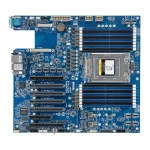
This bundle pairs the AMD EPYC 7343 with the Gigabyte MZ32-AR0 to form a high-performance and balanced SP3 server platform. Optimized for frequency-sensitive workloads, general-purpose virtualization, and enterprise databases where high per-core performance and I/O flexibility are essential. Delivers 16 cores of high-frequency Zen 3 performance, massive memory capacity across 16 DIMM slots, and expansive PCIe 4.0 scalability for versatile storage and networking configurations.
Please submit a request, and we will gladly extend discounts on the pricing of our product sets.
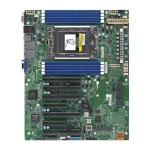
This bundle pairs the AMD EPYC 7343 with the Supermicro H12SSL-I to form a reliable and high-performance SP3 server platform. Optimized for frequency-sensitive workloads, professional virtualization, and enterprise application hosting requiring high per-core throughput. Delivers 16 high-frequency cores based on the Zen 3 (Milan) architecture, 8-channel DDR4 memory support, and full PCIe 4.0 scalability for high-bandwidth storage and networking in demanding IT environments.
Please submit a request, and we will gladly extend discounts on the pricing of our product sets.
P/N: 100-000001476
813€ (inc. VAT (Spain))
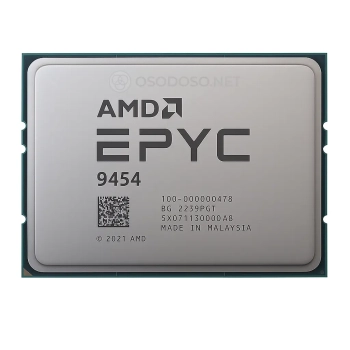
P/N: 100-000000478
2 168€ (inc. VAT (Spain))
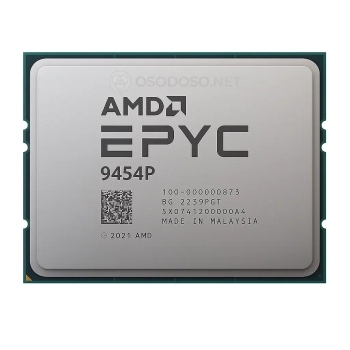
P/N: 100-000000873
2 110€ (inc. VAT (Spain))
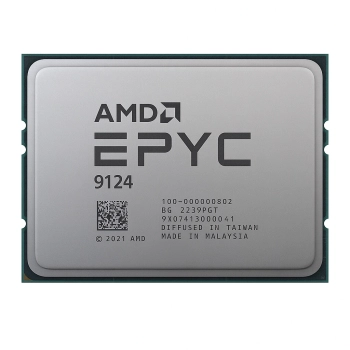
P/N: 100-000000802
720€ (inc. VAT (Spain))
P/N: 100-000000798
1 937€ (inc. VAT (Spain))
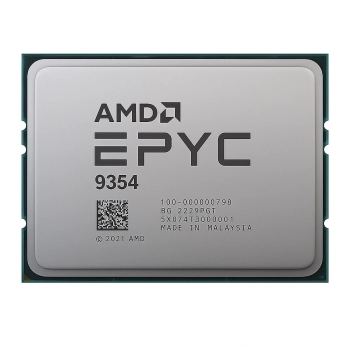
P/N: 100-000001142
4 253€ (inc. VAT (Spain))
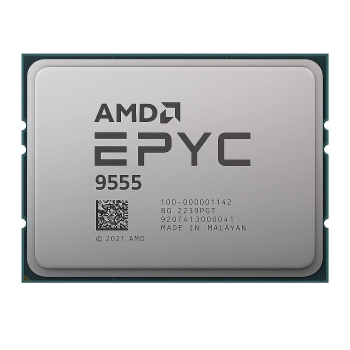
P/N: 100-000001443
5 179€ (inc. VAT (Spain))
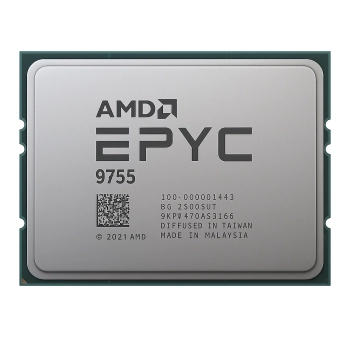
P/N: 100-000000078
293€ (inc. VAT (Spain))
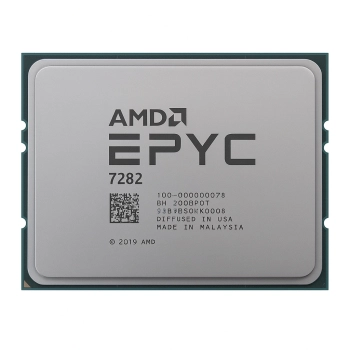
Reviews
There are no reviews yet.