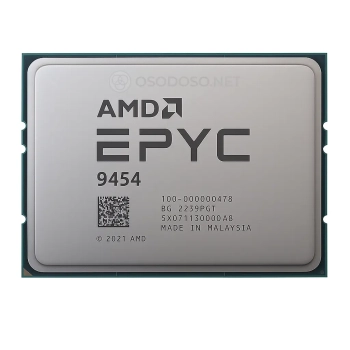
AMD EPYC 9454 48c/96t 2.75GHz-3.8GHz 256W (100-000000478)
P/N: 100-000000478
2 168€ (inc. VAT (Spain))
New
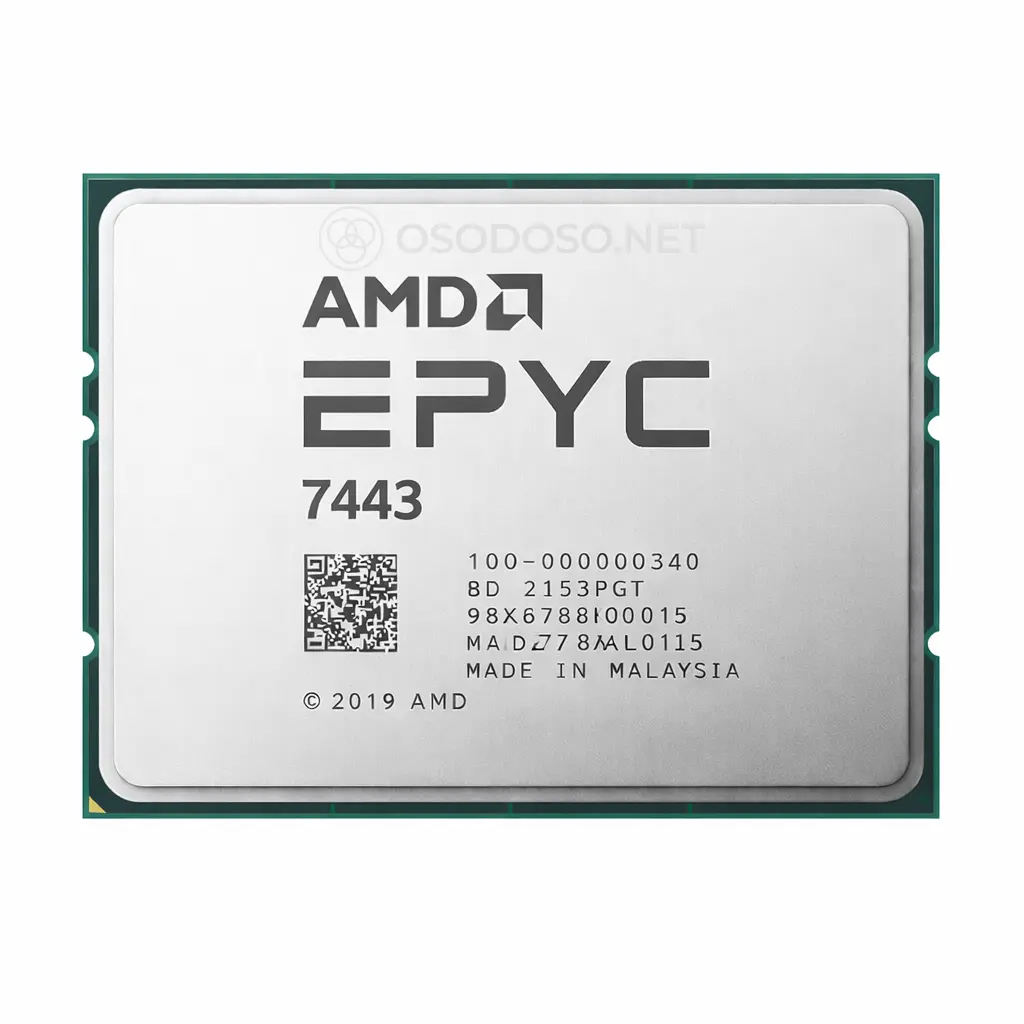
P/N: 100-000000340
744€ (inc. VAT (Spain))
Delivery is made within 3-7 days
This is an estimated timeframe. Delivery times may vary depending on logistics and stock availability.
Warranty 2 year
The product is covered by the manufacturer’s standard warranty.
In stock
Guaranteed Safe Checkout:

AMD EPYC 7443 24-core energy-efficient server processor for modern data centers. Official warranty included.
Our specialist will help you choose the right server components and ensure full compatibility with your system.
| Dimensions | 17 × 17 × 10 cm |
|---|---|
| Country of manufacture | Taiwan |
| Manufacturer's warranty (years) | 1 |
| Series | EPYC |
| Number of cores | 24 |
| Number of threads | 48 |
| Clock frequency (GHz) | 2.85 |
| Cache L3 (MB) | 128 |
| Process technology (nm) | 7 |
| Maximum Turbo Frequency (GHz) | 4.0 |
| Memory type | DDR4 |
| Maximum memory channels | 8 |
| Maximum memory frequency (MHz) | 3200 |
| Heat dissipation TDP (W) | 128 |
| PCI Express controller | PCIE 4.0 |
| Number of PCI Express lanes | 128 |
| Processors on a motherboard | 2 |
| Length (cm) | 17 |
| Width (cm) | 17 |
| Architecture | Zen 3 (Milan) |
| Socket | SP3 |
AMD EPYC 7443 is a 3rd Gen EPYC “Milan” processor positioned as a performance-per-watt–oriented 24-core SKU for enterprise and cloud servers. It sits between frequency-optimized F-series models and higher-TDP throughput parts, offering a balance of core count, clock speed, memory bandwidth, and power efficiency. Within the EPYC 7003 family, the 7443 is commonly selected for production environments where sustained performance, predictable behavior, and lower power envelopes are critical decision factors.
The processor features 24 cores and 48 threads, operating at a 2.85 GHz base frequency with boost clocks up to 4.0 GHz. This clock profile allows EPYC 7443 to deliver strong all-core throughput while still providing competitive single-thread performance for mixed workloads. In practice, it performs well in environments where services scale across many threads but still include latency-sensitive components, such as enterprise applications, middleware layers, and virtualized infrastructure.
Zen 3 cores bring improved instructions-per-clock and better cache behavior compared to previous generations, helping the processor maintain stable performance under sustained and mixed load patterns.
EPYC 7443 includes 128 MB of shared L3 cache, providing a balanced cache-to-core ratio for general-purpose server workloads. This cache size helps reduce memory access latency for frequently used data and improves consistency in virtualized and containerized environments.
The processor supports DDR4-3200 memory across 8 memory channels, which is a defining strength of the EPYC 7003 platform. With symmetric DIMM population, EPYC 7443 can deliver very high aggregate memory bandwidth per socket, making it suitable for memory-intensive applications, virtualization with high VM density, and data-processing workloads that rely on sustained memory throughput.
EPYC 7443 supports PCI Express 4.0 with up to 128 lanes per socket. This extensive I/O capability allows system architects to deploy dense NVMe storage, high-speed network adapters, and additional controllers without external PCIe switches. As a result, the processor integrates well into storage-heavy, network-intensive, and software-defined infrastructure designs.
The CPU uses the SP3 socket and supports both single-socket and dual-socket server configurations, depending on platform validation. This flexibility enables deployment across a wide range of enterprise server designs, from efficient 1P systems to scalable 2P platforms.
EPYC 7443 is rated at 128 W TDP, which is relatively low for a 24-core server processor. This power envelope makes it well suited for dense rack deployments and environments where power efficiency and thermal headroom are important. With proper server-grade cooling, the processor can sustain predictable performance under continuous load while keeping operating costs under control.
EPYC 7443 is best suited for workloads that require a balanced mix of throughput, efficiency, and platform capability. Typical use cases include virtualization hosts with high VM density, cloud and hosting infrastructure prioritizing performance per watt, enterprise application and middleware servers, and memory-intensive workloads benefiting from 8-channel DDR4 bandwidth. It is an effective choice when workloads scale well across many cores and demand full EPYC memory and I/O capabilities, while keeping power consumption lower than higher-TDP alternatives.
Only logged in customers who have purchased this product may leave a review.
The AMD EPYC 7443 processor represents a balanced solution in the EPYC 7003 lineup, focused on delivering high performance in multi-threaded tasks while maintaining high energy efficiency. Thanks to the Zen 3 architecture and an optimal ratio of core count to clock speed, this model holds a confident position among 24-core solutions and its closest analogs, offering versatility for database servers, virtualization, and hyperconverged infrastructures. A comparison with nine of the series’ closest competitors is presented below.
| Processor Model | Cores / Threads | Base Frequency (GHz) | Max Turbo (GHz) | L3 Cache (MB) | TDP (W) |
|---|---|---|---|---|---|
| AMD EPYC 7443 | 24 / 48 | 2.85 | 4.0 | 128 | 128 |
| AMD EPYC 7413 | 24 / 48 | 2.65 | 3.6 | 128 | 180 |
| AMD EPYC 7443P | 24 / 48 | 2.85 | 4.0 | 128 | 200 |
| AMD EPYC 74F3 | 24 / 48 | 3.2 | 4.0 | 256 | 240 |
| AMD EPYC 7473X | 24 / 48 | 2.8 | 3.7 | 768 | 240 |
| AMD EPYC 7453 | 28 / 56 | 2.75 | 3.45 | 64 | 225 |
| AMD EPYC 7343 | 16 / 32 | 3.2 | 3.9 | 128 | 190 |
| AMD EPYC 7313 | 16 / 32 | 3.0 | 3.7 | 128 | 155 |
| AMD EPYC 7313P | 16 / 32 | 3.0 | 3.7 | 128 | 155 |
| AMD EPYC 7373X | 16 / 32 | 3.05 | 3.8 | 768 | 240 |
Based on the data in the comparative table, the AMD EPYC 7443 demonstrates several key technical advantages that distinguish it from its competitors:
The AMD EPYC 7443 is a benchmark choice for this regional segment, where the balance between computing power and power consumption is a priority. The processor prevails over competitors through a combination of high base frequency, substantial cache volume, and record-low heat dissipation for its class (according to the specifications in the table). This makes it an ideal solution for infrastructure modernization requiring high computing density without excessive costs for cooling and power.
The processor features 24 physical cores and supports 48 threads. The base clock frequency is 2.85 GHz with an automatic boost capability up to 4.0 GHz. The Level 3 (L3) cache size is 128 MB.
Thanks to its balanced core count and high frequency, the AMD EPYC 7443 is ideally suited for virtualization, database management, hyperconverged infrastructures, and enterprise applications where both multi-threading and single-core performance are important.
The AMD EPYC 7443 fits the Socket SP3 (LGA 4094). This is the standard socket for the EPYC 7002 and 7003 server processor families.
Yes, the EPYC 7443 model (without the “P” suffix in the name) supports installation in dual-socket motherboards, allowing for the creation of powerful servers with a total of 48 cores and 96 threads.
The processor supports 8-channel DDR4 memory with frequencies up to 3200 MHz. The maximum supported memory capacity is 4 TB per socket, and Error Correction Code (ECC) memory is also supported.
The TDP rating is 128 W. This is one of the most energy-efficient figures in its class, allowing the use of standard air cooling systems and reducing requirements for server power supply units.
The AMD EPYC 7443 supports the PCIe 4.0 interface, providing up to 128 I/O lanes. This ensures high bandwidth for connecting modern NVMe drives and network adapters.
The model is based on the Zen 3 microarchitecture (codenamed Milan), which provides a significant performance gain (IPC) compared to the previous generation, as well as improved security.
If you plan to use a motherboard released for the previous generation (EPYC 7002 “Rome” series), a BIOS update to the current version will likely be required to support the 7003 series processors.
Fast and reliable delivery across the European Union
Estimated transit time: 3–7 days from order confirmation. Worldwide shipping is available for customers outside the EU.
All orders are processed within 24 hours after confirmation. Tracking information is provided as soon as the parcel leaves our logistics center.
Multiple Secure Payment Methods
We accept: Visa, MasterCard, PayPal, Bank Transfer, Klarna, Stripe, Revolut Pay, Google Pay, Apple Pay, and USDT (TRC20) cryptocurrency payments.
All transactions are encrypted and processed via certified payment gateways for your security.
Additional Notes
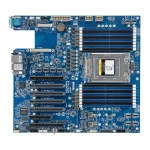
This bundle pairs the AMD EPYC 7443 with the Gigabyte MZ32-AR0 to form a high-performance and versatile SP3 server platform. Optimized for dense virtualization, intensive database management, and professional rendering tasks where a high core count and high clock speeds must be balanced. Delivers 24 cores of Zen 3 performance, massive memory expansion via 16 DIMM slots, and expansive PCIe 4.0 connectivity for high-speed storage and networking arrays.
Please submit a request, and we will gladly extend discounts on the pricing of our product sets.
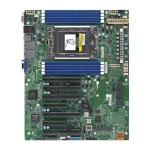
This bundle pairs the AMD EPYC 7443 with the Supermicro H12SSL-I to form a reliable and high-performance SP3 server platform. Optimized for dense virtualization, mission-critical databases, and professional applications requiring a perfect balance between high core count and high clock speeds. Delivers 24 cores of Zen 3 (Milan) efficiency, 8-channel DDR4 memory support, and full PCIe 4.0 scalability for robust, high-bandwidth server deployments in demanding IT environments.
Please submit a request, and we will gladly extend discounts on the pricing of our product sets.
P/N: 100-000000478
2 168€ (inc. VAT (Spain))
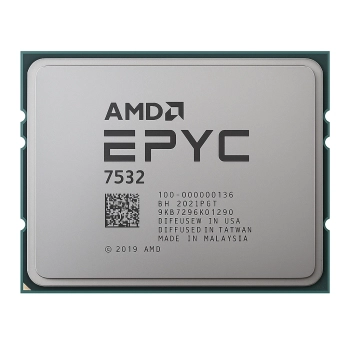
P/N: 100-000000136
373€ (inc. VAT (Spain))
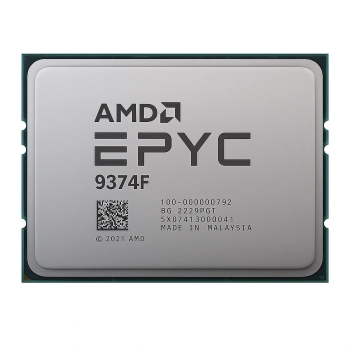
P/N: 100-000000792
2 863€ (inc. VAT (Spain))
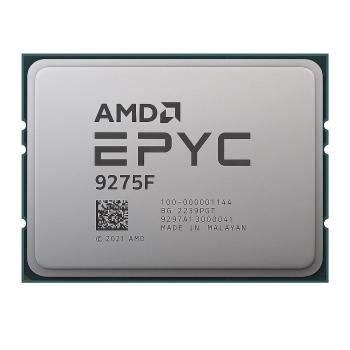
P/N: 100-000001144
3 615€ (inc. VAT (Spain))
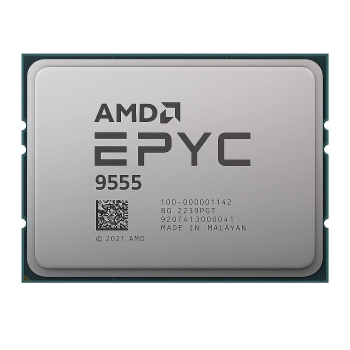
P/N: 100-000001142
4 253€ (inc. VAT (Spain))
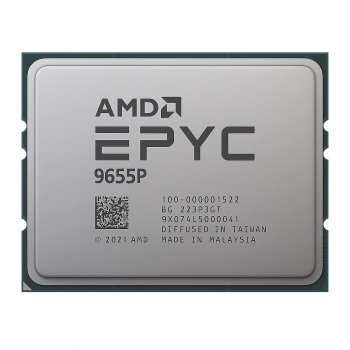
P/N: 100-000001522
4 137€ (inc. VAT (Spain))
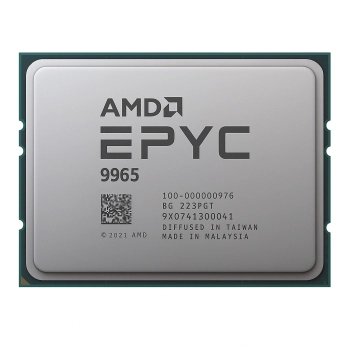
P/N: 100-000000976
5 931€ (inc. VAT (Spain))
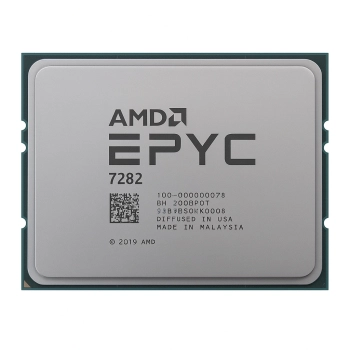
P/N: 100-000000078
293€ (inc. VAT (Spain))
Reviews
There are no reviews yet.