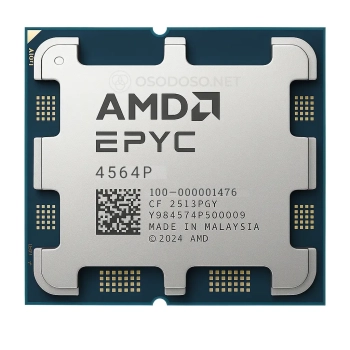
AMD EPYC 4564P 16c/32t 4.5GHz-5.7GHz 170W (100-000001476)
P/N: 100-000001476
813€ (inc. VAT (Spain))
New
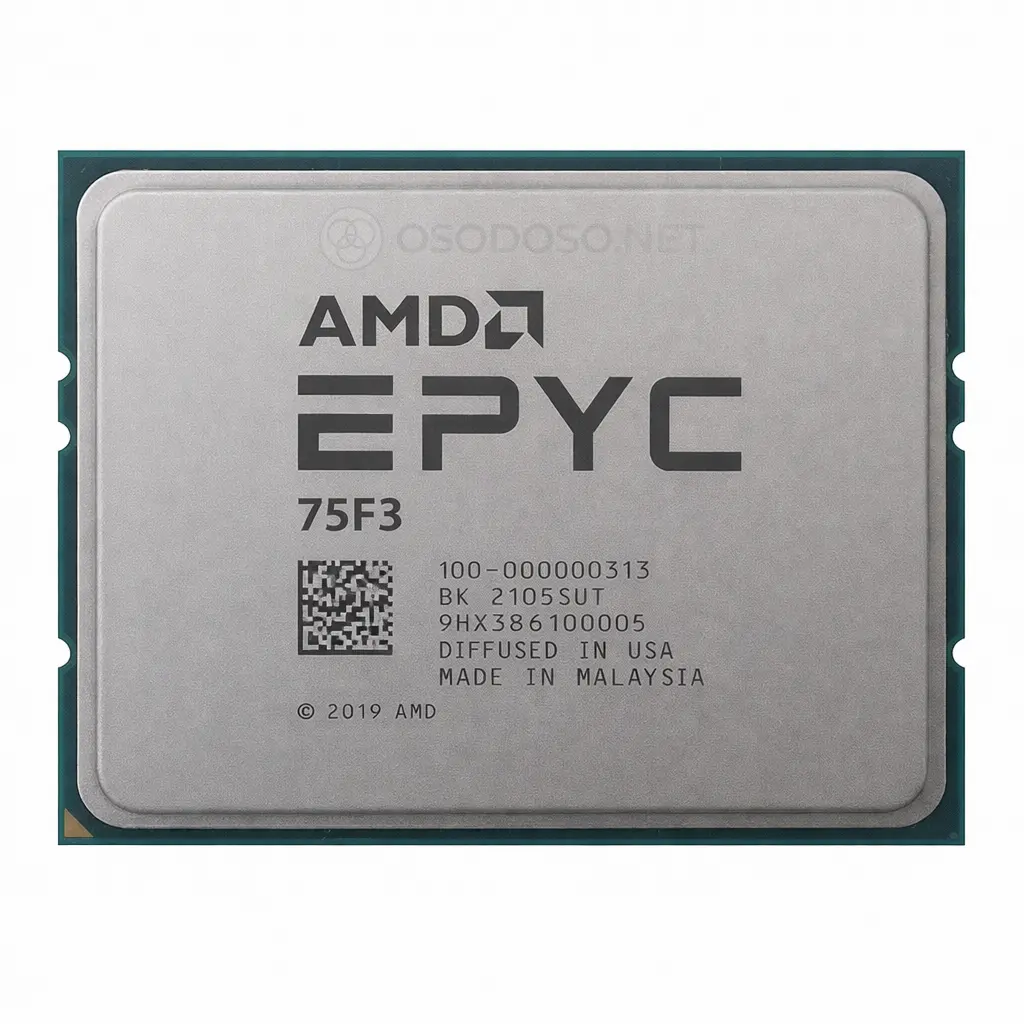
P/N: 100-000000313
1 300€ (inc. VAT (Spain))
Delivery is made within 3-7 days
This is an estimated timeframe. Delivery times may vary depending on logistics and stock availability.
Warranty 2 year
The product is covered by the manufacturer’s standard warranty.
In stock
Guaranteed Safe Checkout:

AMD EPYC 75F3 high-frequency 32-core server CPU for latency-sensitive enterprise workloads. Official warranty included.
Our specialist will help you choose the right server components and ensure full compatibility with your system.
| Country of manufacture | Taiwan |
|---|---|
| Manufacturer's warranty (years) | 1 |
| Series | EPYC |
| Number of cores | 32 |
| Number of threads | 64 |
| Clock frequency (GHz) | 2.95 |
| Cache L3 (MB) | 256 |
| Process technology (nm) | 7 |
| Maximum Turbo Frequency (GHz) | 4.0 |
| Memory type | DDR4 |
| Maximum memory channels | 8 |
| Maximum memory frequency (MHz) | 3200 |
| Heat dissipation TDP (W) | 280 |
| PCI Express controller | PCIE 4.0 |
| Number of PCI Express lanes | 128 |
| Processors on a motherboard | 2 |
| Architecture | Zen 3 (Milan) |
| Socket | SP3 |
AMD EPYC 75F3 is a 3rd Gen EPYC 7003-series processor (“Milan”, Zen 3) built for server environments that prioritize strong per-core performance while still delivering a high core count for mixed enterprise workloads. It belongs to AMD’s frequency-optimized “F” lineup, which typically targets latency-sensitive tiers such as application servers, high-transaction middleware, and database deployments where faster core clocks can reduce tail latency and improve responsiveness under contention.
This SKU provides 32 cores and 64 threads with a 2.95 GHz base clock and up to 4.0 GHz boost. The practical value of the 75F3 is its ability to keep performance high in environments where not every task scales cleanly across all available threads. Typical examples include services constrained by locks, serialization points, interpreter or JVM characteristics, and database operations where single-thread or lightly parallel phases determine the overall request time.
For capacity planning, the 32-core footprint is also a sweet spot for many enterprise licensing and VM density strategies: it can consolidate heavily while avoiding the operational complexity and higher power envelopes of extreme core-count parts.
EPYC 75F3 includes 256 MB of L3 cache, which is substantial for a 32-core server CPU. In real systems, larger shared cache can reduce DRAM traffic for hot datasets, improve hit rates for frequently accessed structures (indexes, session state, metadata), and stabilize performance when multiple tenants compete for memory bandwidth. The outcome is often not a single headline number, but a more consistent latency profile during sustained load, which matters for production SLAs.
The platform supports DDR4-3200 across 8 memory channels per socket, which is a core advantage of EPYC for memory bandwidth–driven workloads. Even for frequency-focused deployments, memory configuration strongly affects real throughput: symmetric DIMM population, correct rank selection, and avoiding channel imbalance can prevent bandwidth bottlenecks that negate the benefit of higher clocks.
In virtualization and container platforms, this memory subsystem enables high consolidation ratios without starving guests, especially when combined with careful NUMA placement and pinned resource policies for latency-sensitive services.
EPYC 75F3 supports PCI Express 4.0 with up to 128 lanes, enabling dense NVMe layouts and high-speed networking without external PCIe switching in many designs. For infrastructure engineers, this is a major lever: you can build storage-heavy nodes (multiple U.2/U.3 NVMe drives), network-heavy nodes (100/200GbE), or mixed accelerator configurations while keeping the topology clean and predictable.
The processor uses socket SP3 and supports both single-socket and dual-socket servers. Dual-socket designs can be attractive when you need to scale memory capacity and aggregate bandwidth per node, or when you want more PCIe connectivity in one chassis. Single-socket designs often deliver excellent performance-per-cost for application tiers while simplifying platform validation and reducing operational overhead.
With a 280 W TDP, EPYC 75F3 is meant for properly engineered server platforms with sufficient airflow and heatsink capacity. In dense racks, real stability comes from treating cooling as part of the design, not an afterthought: chassis selection, fan profiles, ambient constraints, and sustained turbo behavior all influence whether the CPU can maintain consistent performance under continuous workload pressure.
EPYC 75F3 is usually chosen when profiling shows that higher frequency translates into better end-to-end outcomes than simply adding more cores. It tends to be a strong fit for database tiers with latency-sensitive operations, enterprise application servers, high-throughput middleware, and virtualized environments that include a mix of noisy and latency-critical tenants. If your workload is purely throughput-bound and scales linearly with cores, higher-core EPYC options may be a better value. If the workload is cache-dominant, X-series 3D V-Cache models can be more effective.
Only logged in customers who have purchased this product may leave a review.
Fast and reliable delivery across the European Union
Estimated transit time: 3–7 days from order confirmation. Worldwide shipping is available for customers outside the EU.
All orders are processed within 24 hours after confirmation. Tracking information is provided as soon as the parcel leaves our logistics center.
Multiple Secure Payment Methods
We accept: Visa, MasterCard, PayPal, Bank Transfer, Klarna, Stripe, Revolut Pay, Google Pay, Apple Pay, and USDT (TRC20) cryptocurrency payments.
All transactions are encrypted and processed via certified payment gateways for your security.
Additional Notes
P/N: 100-000001476
813€ (inc. VAT (Spain))

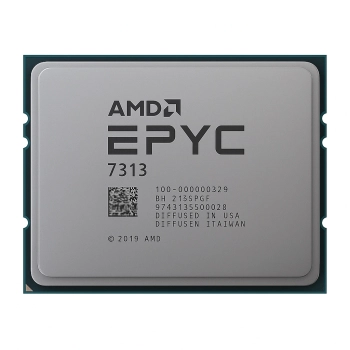
P/N: 100-000000329
686€ (inc. VAT (Spain))
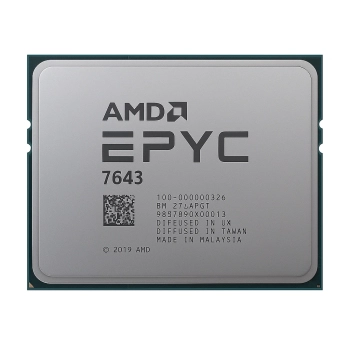
P/N: 100-000000326
1 335€ (inc. VAT (Spain))
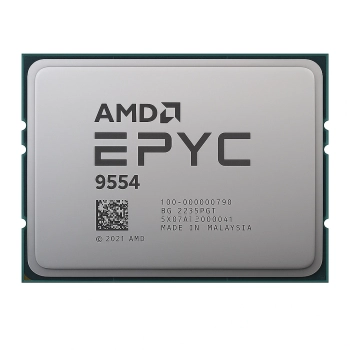
P/N: 100-000000790
3 790€ (inc. VAT (Spain))
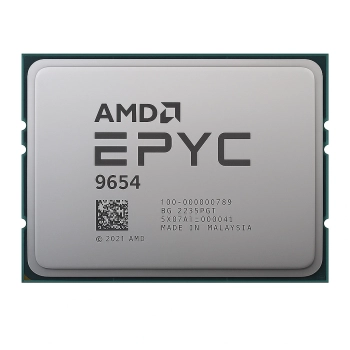
P/N: 100-000000789
3 442€ (inc. VAT (Spain))
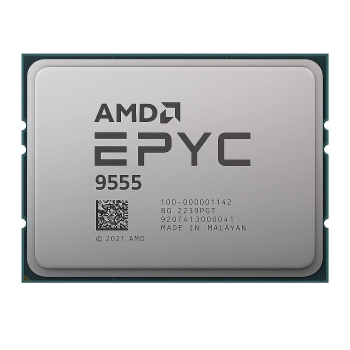
P/N: 100-000001142
4 253€ (inc. VAT (Spain))
P/N: 100-000000976
5 931€ (inc. VAT (Spain))
Reviews
There are no reviews yet.