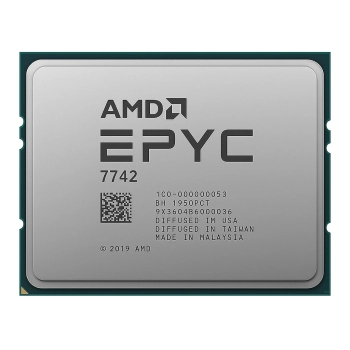
AMD EPYC 7742 64c/128t 2.25GHz-3.4GHz 225W (100-000000053)
P/N: 100-000000053
675€ (inc. VAT (Spain))
New
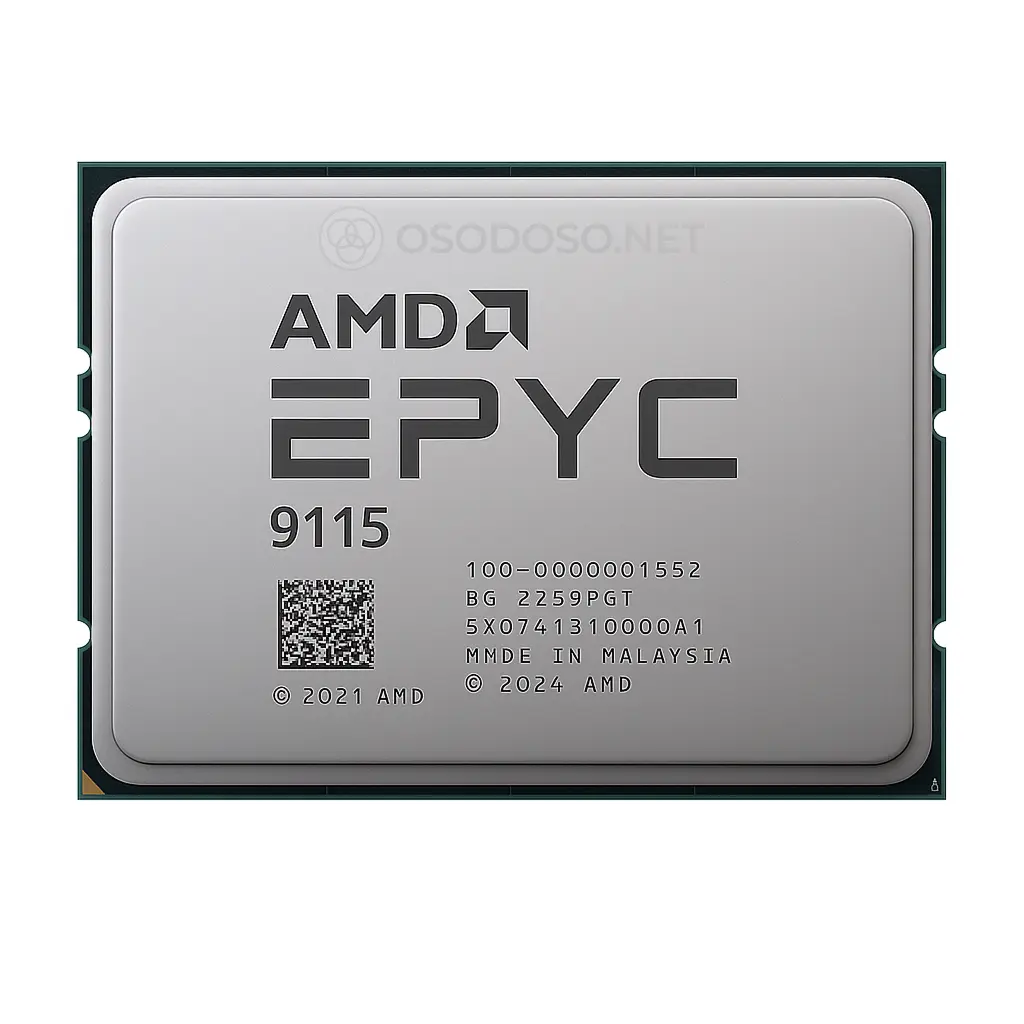
P/N: 100-000001552
1 091€ (inc. VAT (Spain))
Delivery is made within 3-7 days
This is an estimated timeframe. Delivery times may vary depending on logistics and stock availability.
Warranty 2 year
The product is covered by the manufacturer’s standard warranty.
In stock
Guaranteed Safe Checkout:

AMD EPYC 9115 16-core Turin CPU with fast EU delivery and worldwide shipping. Official warranty included.
Our specialist will help you choose the right server components and ensure full compatibility with your system.
| Dimensions | 17 × 17 × 10 cm |
|---|---|
| Country of manufacture | Taiwan |
| Manufacturer's warranty (years) | 1 |
| Series | EPYC |
| Number of cores | 16 |
| Number of threads | 32 |
| Clock frequency (GHz) | 2.6 |
| Cache L3 (MB) | 64 |
| Cache L2 (MB) | 1 |
| Process technology (nm) | 4 |
| Maximum Turbo Frequency (GHz) | 4.1 |
| Memory type | DDR5 |
| Maximum memory channels | 12 |
| Maximum memory frequency (MHz) | 6400 |
| Heat dissipation TDP (W) | 125 |
| PCI Express controller | PCIE 5.0 |
| Number of PCI Express lanes | 128 |
| Processors on a motherboard | 2 |
| Length (cm) | 17 |
| Width (cm) | 17 |
| Architecture | Zen 5 |
| Socket | SP5 |
The AMD EPYC 9115 is one of the most strategically important entry-tier models of the Zen 5–based “Turin” generation. Although it offers a modest 16-core, 32-thread configuration on paper, the processor plays a very different role in real datacenter environments. It brings all of Turin’s architectural and platform-level advancements—high-efficiency Zen 5 cores, a redesigned execution pipeline, 12-channel DDR5 at 6400 MT/s, and a full 128 PCIe 5.0 lanes—to workloads that value low latency, predictable performance and strong per-core throughput as much as overall parallel compute density.
Zen 5 represents one of the largest architectural transformations in AMD’s server roadmap. Its widened front end, deeper instruction windows, more accurate branch prediction and enhanced memory scheduling allow the EPYC 9115 to deliver unusually strong single-thread and lightly-threaded performance. This matters across a wide spectrum of real-world workloads. Microservice-oriented architectures, event-driven backends and middleware stacks frequently depend on the responsiveness of individual cores rather than raw aggregate compute. Early engineering evaluations from cloud providers indicate that Zen 5 maintains lower tail latency under mixed CPU and I/O load compared to both Genoa (Zen 4) and Milan (Zen 3), particularly in microservice-heavy environments where unpredictable contention patterns are common.
The memory subsystem is another defining factor. With access to the full 12-channel DDR5 configuration of SP5, the EPYC 9115 benefits from significantly higher aggregate bandwidth than many previous-generation dual-socket platforms. This enables the processor to handle memory-bound workloads with a level of consistency that is unusual for a 16-core CPU. In practice, databases such as PostgreSQL and MySQL demonstrate measurable improvements when executing large analytical queries, multi-join operations or high-concurrency OLTP workloads. These gains originate not simply from Zen 5’s IPC uplift but from its improved ability to sustain high parallel memory operations without stalling under pressure.
I/O capabilities elevate the processor even further. The EPYC 9115 exposes the same 128 PCIe 5.0 lanes present in high-end Turin models, making it uniquely suited for specialized roles that require broad connectivity despite a lower core count. Storage controllers, edge compute nodes with multiple accelerator cards and network appliances operating with 100–400 GbE interfaces benefit from the processor’s ability to support large-scale expansion without contention. Several early adopters in NVMe-over-Fabrics and composable infrastructure have identified the 9115 as a preferred platform because it enables high-throughput PCIe architectures without the thermal and power demands of high-core-count SKUs.
Another practical advantage of the EPYC 9115 lies in its impact on licensing and operational cost. Many enterprise systems—including major virtualization stacks, proprietary databases and analytics engines—are still licensed per socket or per core. A 16-core CPU that delivers high IPC, full SP5 memory bandwidth and extensive I/O becomes extremely cost-effective in these scenarios. Organizations in finance, media and real-time analytics have already begun evaluating Turin-based entry SKUs as replacements for older dual-socket Xeon designs. They often report that the combined savings in software licensing and power consumption exceed the cost advantage of the hardware itself.
In modern cloud-native infrastructures, the EPYC 9115 demonstrates strong behavior in container orchestration environments. Improved per-core determinism translates directly into smoother autoscaling patterns, more predictable latency under microbursts and improved performance stability for service meshes. Clusters built on low-to-mid core count CPUs with strong single-thread performance often scale more gracefully and maintain more consistent service-level objectives than nodes built on extremely high core-count processors experiencing larger scheduling variability.
Despite not being marketed as a dedicated HPC part, the EPYC 9115 performs well in compute workloads that depend on fast scalar and vector execution. Zen 5 brings enhancements to ALU throughput and SIMD behavior, allowing the CPU to handle scientific pre-processing, genomics workflows, CPU-side inference and simulation orchestration duties effectively. It is particularly well-suited as a control-plane CPU in GPU-accelerated HPC clusters, where orchestration, I/O scheduling and data preparation require fast, responsive cores while GPUs handle the bulk of the floating-point computation.
The most compelling aspect of the EPYC 9115 is how it brings the full capabilities of the Turin platform—memory bandwidth, PCIe 5.0, CXL support and architectural efficiency—to a low-core-count SKU without sacrificing performance characteristics typically expected from higher-end processors. It aligns with the growing industry trend toward horizontally scaled, single-socket server designs, where compute capacity increases through more nodes rather than larger ones. In environments emphasizing elasticity, deterministic performance and operational simplicity, the 9115 represents an effective and balanced foundation for next-generation infrastructure.
Overall, the AMD EPYC 9115 stands out as a technically refined processor designed for the realities of modern datacenters. It offers high per-core efficiency, strong memory performance, broad expansion capability and a power profile well-suited for dense deployments. Its blend of architectural improvements and platform-level strengths makes it particularly valuable for latency-sensitive applications, I/O-heavy systems, virtualized clusters and distributed compute layers where predictability and efficiency matter as much as raw throughput.
Only logged in customers who have purchased this product may leave a review.
In the AMD EPYC 9005 series processor lineup, the 9115 model occupies the position of the most energy-efficient solution. This processor is designed to provide an optimal balance between performance and heat dissipation, making it an excellent choice for dense computing environments and tasks where power consumption metrics are critical. Unlike high-frequency “F” index models oriented towards maximum speed at any cost, the AMD EPYC 9115 offers a reasonable compromise, retaining all the architectural advantages of the series with a significantly reduced TDP.
| Processor Model | Cores / Threads | Base Frequency (GHz) | Turbo Boost (GHz) | L3 Cache (MB) | TDP (W) |
|---|---|---|---|---|---|
| AMD EPYC 9115 | 16 / 32 | 2.6 | 4.1 | 64 | 125 |
| AMD EPYC 9015 | 16 / 32 | 2.6 | 4.1 | 64 | 125 |
| AMD EPYC 9135 | 16 / 32 | 3.65 | 4.3 | 64 | 200 |
| AMD EPYC 9175F | 16 / 32 | 4.2 | 5 | 512 | 320 |
| AMD EPYC 9255 | 24 / 48 | 3.2 | 4.3 | 128 | 200 |
| AMD EPYC 9275F | 24 / 48 | 4.1 | 4.8 | 256 | 320 |
| AMD EPYC 9335 | 32 / 64 | 3.0 | 4.4 | 128 | 210 |
| AMD EPYC 9355 | 32 / 64 | 3.55 | 4.4 | 256 | 280 |
| AMD EPYC 9355P | 32 / 64 | 3.55 | 4.4 | 280 | 280 |
| AMD EPYC 9375F | 32 / 64 | 3.8 | 4.8 | 320 | 320 |
Based on the technical specifications, the AMD EPYC 9115 demonstrates a clear advantage in the energy-efficient solutions segment:
The AMD EPYC 9115 is the ideal choice for infrastructure solutions where the priority is reducing operational costs for electricity and cooling, rather than achieving maximum peak performance. The processor prevails over competitors in energy efficiency metrics, offering modern Zen 5 architecture and high boost frequencies within a thermal package of 125 W, which is unprecedentedly low for the server segment.
The AMD EPYC 9115 is an energy-efficient 16-core processor ideally suited for high-density servers, Edge Computing, and enterprise applications where a balance between performance and low power consumption is crucial. It excels in handling web servers, entry-level databases, and network gateways.
The processor uses the SP5 socket. It is compatible with server motherboards designed for the AMD EPYC 9005 platform. When upgrading previous generation systems (e.g., based on the 9004 series), a motherboard BIOS update may be required.
This processor features one of the lowest TDP ratings in its lineup — just 125 W. This allows for the use of more compact cooling systems and reduces power supply requirements in the data center, making it an economically viable solution for operation.
Yes, the AMD EPYC 9115 supports 12-channel DDR5 memory. This provides significantly higher data bandwidth compared to previous DDR4 generations, which is critical for tasks sensitive to memory speed.
The processor supports the PCIe 5.0 interface, providing double the bandwidth compared to PCIe 4.0. This allows for connecting next-generation high-speed network adapters and modern NVMe drives without data transfer bottlenecks.
Unlike models with the “F” (Frequency) suffix, which target maximum clock speeds and performance at any cost (resulting in high TDP), the 9115 model focuses on energy efficiency. It offers decent performance (up to 4.1 GHz in Boost mode) with significantly lower power consumption and heat dissipation.
Yes, thanks to its 16 physical cores and support for 32 computing threads, this processor serves as an excellent foundation for entry and mid-level virtualization environments. It ensures stable operation for multiple virtual machines at a low cost per core.
The processor is equipped with 64 MB of Level 3 (L3) cache. This capacity allows for efficient processing of data requests and reduced latency when accessing RAM, positively impacting overall system responsiveness.
Yes, AMD EPYC 9005 series processors support operation in dual-socket (2P) configurations. This allows you to double the number of cores, RAM capacity, and PCIe lanes within a single server, creating a powerful platform based on energy-efficient chips.
Fast and reliable delivery across the European Union
Estimated transit time: 3–7 days from order confirmation. Worldwide shipping is available for customers outside the EU.
All orders are processed within 24 hours after confirmation. Tracking information is provided as soon as the parcel leaves our logistics center.
Multiple Secure Payment Methods
We accept: Visa, MasterCard, PayPal, Bank Transfer, Klarna, Stripe, Revolut Pay, Google Pay, Apple Pay, and USDT (TRC20) cryptocurrency payments.
All transactions are encrypted and processed via certified payment gateways for your security.
Additional Notes
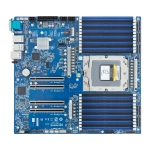
This bundle pairs the AMD EPYC 9115 with the Gigabyte MZ33-AR1 to form a highly efficient and modern SP5 server platform. Optimized for edge computing, entry-level virtualization, and essential business applications where power efficiency is a priority. Delivers reliable 8-core performance based on the latest Zen 5 architecture, massive DDR5 memory bandwidth, and PCIe 5.0 scalability for budget-conscious, forward-looking enterprise infrastructures.
Please submit a request, and we will gladly extend discounts on the pricing of our product sets.
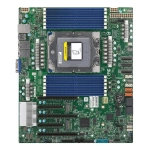
This bundle pairs the AMD EPYC 9115 with the Supermicro H13SSL-NT to form a high-efficiency and modern SP5 server platform. Optimized for edge computing, lightweight virtualization, and dedicated networking or storage appliances where power consumption is a key factor. Delivers reliable 8-core performance based on the latest Zen 5 architecture, 12-channel DDR5 memory support, and ultra-fast dual 10GbE connectivity for streamlined business environments.
Please submit a request, and we will gladly extend discounts on the pricing of our product sets.
P/N: 100-000000053
675€ (inc. VAT (Spain))
P/N: 100-000000345
860€ (inc. VAT (Spain))
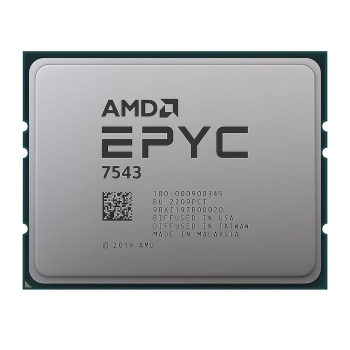
P/N: 100-000000802
720€ (inc. VAT (Spain))
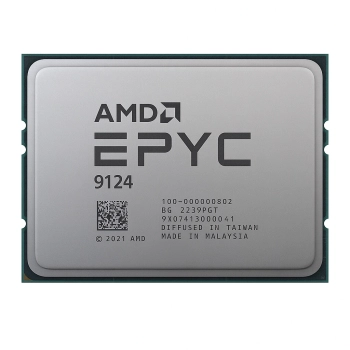
P/N: 100-000000800
2 110€ (inc. VAT (Spain))
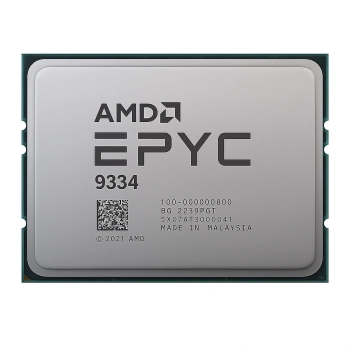
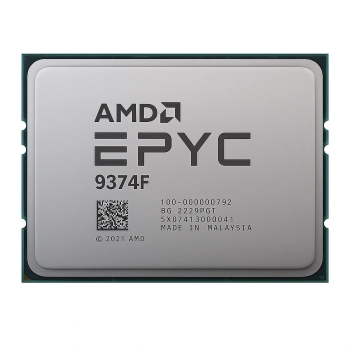
P/N: 100-000000792
2 863€ (inc. VAT (Spain))
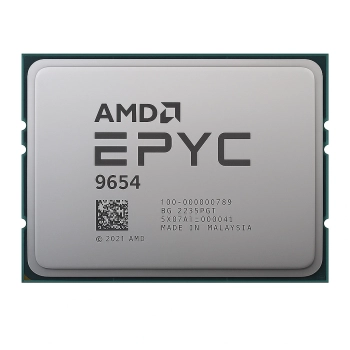
P/N: 100-000000789
3 442€ (inc. VAT (Spain))
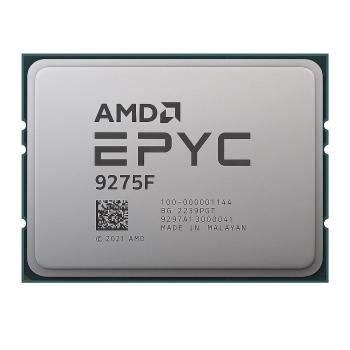
P/N: 100-000001144
3 615€ (inc. VAT (Spain))
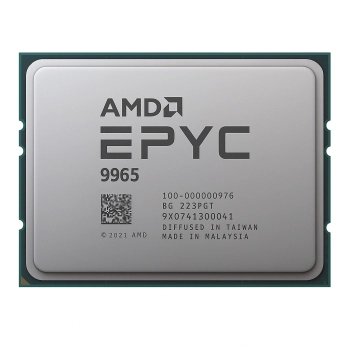
P/N: 100-000000976
5 931€ (inc. VAT (Spain))
Reviews
There are no reviews yet.