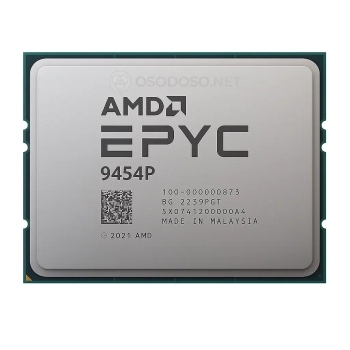
AMD EPYC 9454P 48c/96t 2.75GHz-3.8GHz 290W (100-000000873)
P/N: 100-000000873
2 110€ (inc. VAT (Spain))
New
P/N: 100-000000480
1 705€ (inc. VAT (Spain))
Delivery is made within 3-7 days
This is an estimated timeframe. Delivery times may vary depending on logistics and stock availability.
Warranty 2 year
The product is covered by the manufacturer’s standard warranty.
In stock
Guaranteed Safe Checkout:

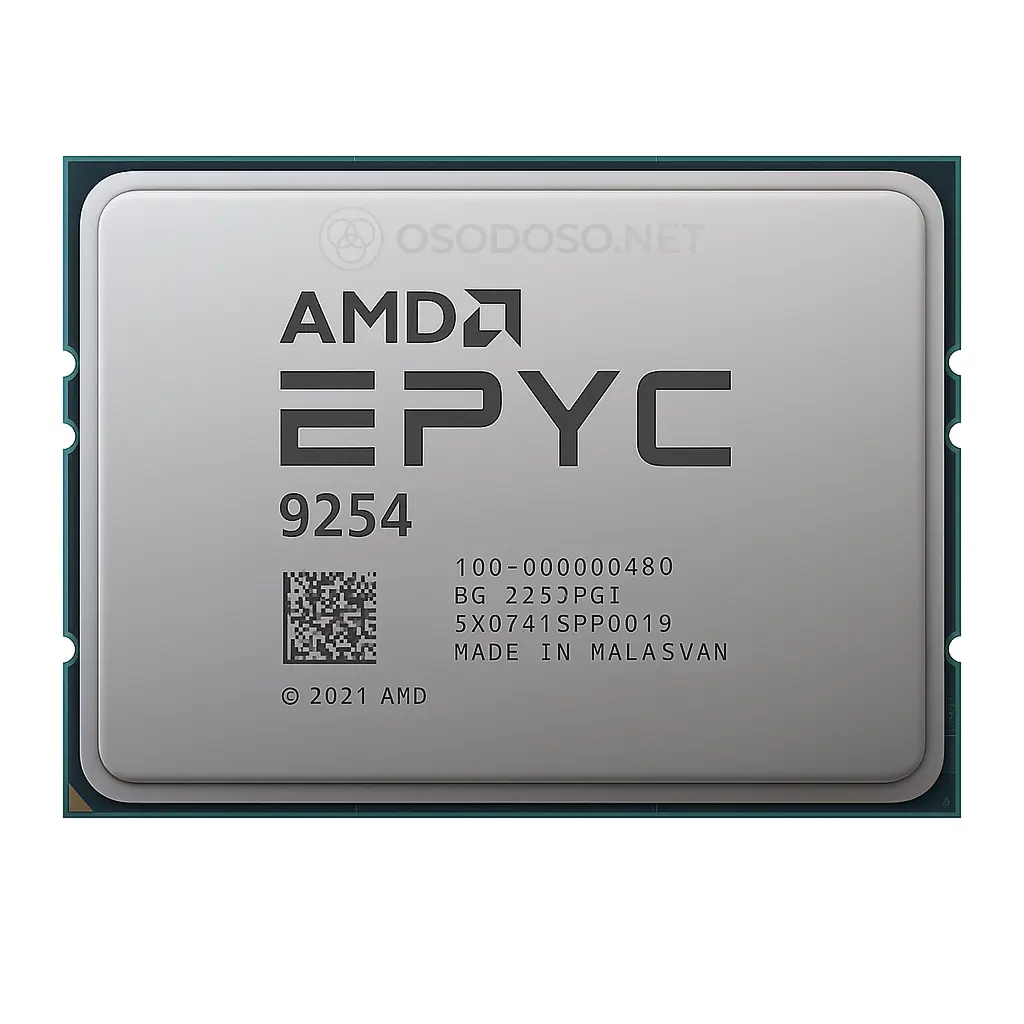
AMD EPYC 9254 24-core server CPU with fast EU delivery and worldwide shipping. Official warranty included.
Our specialist will help you choose the right server components and ensure full compatibility with your system.
| Dimensions | 17 × 17 × 10 cm |
|---|---|
| Country of manufacture | Taiwan |
| Manufacturer's warranty (years) | 1 |
| Series | EPYC |
| Number of cores | 24 |
| Number of threads | 48 |
| Clock frequency (GHz) | 2.9 |
| Cache L3 (MB) | 128 |
| Cache L2 (MB) | 1 |
| Process technology (nm) | 5 |
| Maximum Turbo Frequency (GHz) | 4.15 |
| Memory type | DDR5 |
| Maximum memory channels | 12 |
| Maximum memory frequency (MHz) | 4800 |
| Heat dissipation TDP (W) | 200 |
| PCI Express controller | PCIE 5.0 |
| Number of PCI Express lanes | 128 |
| Processors on a motherboard | 2 |
| Length (cm) | 17 |
| Width (cm) | 17 |
| Architecture | Zen 4 |
| Socket | SP5 |
The AMD EPYC 9254 is a 24-core, 48-thread server processor from the Zen 4–based Genoa (SP5) family, designed as a balanced, power-efficient entry point into the latest-generation EPYC platform. While many Genoa CPUs focus on extreme core counts for cloud and HPC workloads, the 9254 targets organizations that need modern I/O, high memory bandwidth and strong multi-thread performance, but do not require 64–96 cores per socket. With a 2.9 GHz base clock, 4.15 GHz max boost, 128 MB of L3 cache and a 200 W TDP, it provides a well-balanced compute profile suitable for general-purpose servers, virtualization, database engines and cloud-native deployments.
Genoa represents AMD’s mainstream Zen 4 server offering, built to replace EPYC 7003 Milan. It introduces the new SP5 socket with 12 memory channels, support for DDR5, up to 128 PCIe 5.0 lanes, Zen 4 IPC improvements and higher energy efficiency. The EPYC 9254 sits in the middle of the lineup: not as frequency-optimized as 9274F and not as core-dense as 9354 or 9454, but positioned as an ideal workhorse CPU for enterprise infrastructure where balance matters more than extremes.
By combining a modern memory subsystem and wide I/O with a moderate core count, the 9254 is targeted at compute nodes that must handle a mix of workloads: virtual machines, databases, application servers and background analytics tasks, without committing to the power and cost envelope of the largest SKUs.
The EPYC 9254 is highly versatile and fits a wide range of production environments, especially those where both multi-thread performance and memory bandwidth are important.
Virtualization and cloud infrastructure
With 24 Zen 4 cores and 48 threads, the 9254 delivers excellent consolidation ratios for VMware, KVM-based virtualization or Kubernetes worker nodes. It can host a significant number of virtual machines or containers with enough headroom for control-plane and background services. The 200 W TDP makes it attractive for dense racks where power budgets and cooling are constrained.
Relational databases
Many database workloads benefit from a combination of strong per-core performance and sufficient parallelism rather than the maximum possible core count. The EPYC 9254 is well suited for PostgreSQL, MySQL/MariaDB, SQL Server and Oracle installations in 1–2 socket configurations, where latency, cache behavior and memory bandwidth influence performance as much as raw thread count.
In-memory and cache systems
The 12-channel DDR5 memory subsystem provides exceptional throughput, which is valuable for Redis or Memcached clusters, in-memory analytics engines, stream processing frameworks and real-time data pipelines. Data-heavy operations gain from the combination of high memory bandwidth and Zen 4’s improved cache hierarchy.
Cloud-native application stacks
Modern microservice platforms, Java/Scala-based backend services, message brokers and search clusters need both responsive single-thread performance and multi-core scalability. The EPYC 9254 delivers this combination, making it an effective choice for application nodes running mixed workloads: APIs, queues, background workers and indexing tasks.
Balanced HPC and scientific compute
Although the 9254 is not a specialized HPC SKU, it performs well in pre- and post-processing steps for simulations, data preparation pipelines, smaller parallel workloads and CPU roles in GPU-accelerated nodes. Its PCIe 5.0 connectivity allows pairing with modern accelerators and high-speed networks without I/O bottlenecks.
One of the defining advantages of Genoa, even at lower core counts, is the 12-channel DDR5 memory subsystem. Compared to previous-generation Milan with eight channels, Genoa offers significantly higher aggregate memory bandwidth, which translates into better scaling for memory-bound workloads and large in-memory datasets.
In addition to memory, the EPYC 9254 supports up to 128 PCIe 5.0 lanes, enabling dense NVMe storage configurations, high-speed network adapters, SmartNICs, DPUs and accelerator cards. Support for CXL 1.1 further extends the platform with memory expanders and advanced accelerator devices. This level of I/O scalability far exceeds what consumer or workstation platforms can offer and is a major reason to adopt Genoa even when the core count is modest.
Within the EPYC 9004 stack, the 9254 occupies a balanced middle tier. Lower-end models like the 9124 provide fewer cores and are more budget-focused, while higher-end parts such as the 9354 or 9454 push core counts for heavy parallelism. Frequency-optimized SKUs (for example, the “F” models) prioritize clock speed, and “X” variants are tuned around expanded L3 cache for analytics and database workloads.
The EPYC 9254 is aimed at organizations that want the benefits of the Genoa platform—DDR5, PCIe 5.0, 12 memory channels—without the cost, power demand or overprovisioning associated with the top of the stack. It is a strong general-purpose option for standardization across a fleet of servers.
At 200 W TDP, the EPYC 9254 offers an attractive efficiency profile. In practical terms, this means lower operating costs, easier cooling and higher node density compared to higher-power SKUs, while still delivering substantial performance. For datacenter operators, this can translate into improved performance per watt and a better balance between compute density and energy consumption.
Typical deployment strategies include using the 9254 as a standard node configuration for virtualization clusters, mixed application environments, search and analytics tiers, and as a base for cloud-native platforms where a uniform, balanced hardware profile simplifies capacity planning.
The AMD EPYC 9254 is one of the most well-rounded processors in the Genoa lineup. It combines modern server features—DDR5, PCIe 5.0, a 12-channel memory subsystem and Zen 4 cores—with a moderate core count and efficient power envelope. It is an excellent choice for virtualization farms, enterprise application stacks, relational databases, search and indexing clusters and cloud-native infrastructure where a balance of performance, efficiency and platform capabilities is more important than maximum core density.
Only logged in customers who have purchased this product may leave a review.
The AMD EPYC 9254 processor from the 9004 series represents a balanced solution, occupying the “golden mean” between energy efficiency and high performance. With 24 computing cores and operating within a strict 200W thermal envelope, this model offers a unique combination of high clock speeds and increased cache size, distinguishing it favorably from both entry-level models and some multi-core flagships oriented towards different tasks.
| Processor Model | Cores / Threads | Base Frequency (GHz) | Turbo Boost (GHz) | L3 Cache (MB) | TDP (W) |
|---|---|---|---|---|---|
| AMD EPYC 9254 | 24 / 48 | 2.9 | 4.15 | 128 | 200 |
| AMD EPYC 9124 | 16 / 32 | 3.0 | 3.7 | 64 | 200 |
| AMD EPYC 9224 | 24 / 48 | 2.5 | 3.7 | 64 | 200 |
| AMD EPYC 9274F | 24 / 48 | 4.05 | 4.3 | 256 | 320 |
| AMD EPYC 9334 | 32 / 64 | 2.7 | 3.9 | 128 | 210 |
| AMD EPYC 9354 | 32 / 64 | 3.25 | 3.8 | 256 | 280 |
| AMD EPYC 9454 | 48 / 96 | 2.75 | 3.8 | 256 | 256 |
| AMD EPYC 9534 | 64 / 128 | 2.45 | 3.7 | 256 | 280 |
| AMD EPYC 9654 | 96 / 192 | 2.4 | 3.7 | 384 | 360 |
| AMD EPYC 9174F | 16 / 32 | 4.1 | 4.4 | 256 | 320 |
Upon detailed comparison with competitors, the AMD EPYC 9254 demonstrates a number of key advantages that make it the optimal choice for a wide range of corporate workloads:
The AMD EPYC 9254 has established itself as a versatile processor offering an excellent balance between multi-threaded power and per-core performance. It is the ideal solution for organizations requiring more cores than base 16-core models and higher frequencies than energy-efficient multi-core variants, while maintaining an economical power consumption budget of 200W.
The AMD EPYC 9254 is a versatile “sweet spot” solution. With its 24-core configuration and high clock speed (up to 4.15 GHz), it is ideally suited for a wide range of enterprise workloads. Key use cases include server virtualization, database management (SQL), web hosting, and per-core licensed software where high performance per individual core is essential.
This model belongs to the AMD EPYC 9004 series and uses the Socket SP5 (LGA 6096) processor socket. To build a server, you will need a motherboard specifically designed for the SP5 platform. Motherboards from previous generations (SP3) are not compatible with this processor.
The processor supports the latest DDR5 ECC (Error Correction Code) memory standard. It features a 12-channel memory controller, providing immense bandwidth for handling large datasets. The maximum supported memory frequency is 4800 MHz (at 1DPC), and total capacity can reach several terabytes depending on the motherboard configuration.
The Thermal Design Power (TDP) of the AMD EPYC 9254 is 200W, which is a highly energy-efficient figure for such performance. This is significantly lower than top-tier models in the series (which can reach 360–400W), reducing cooling system requirements and allowing it to be used in standard server chassis without the need for expensive liquid cooling.
Yes, the processor fully supports the PCI Express 5.0 interface. It provides up to 128 PCIe Gen5 lanes, allowing for the connection of modern high-speed NVMe storage, network interface cards with 100/200/400 Gbps bandwidth, and the latest compute accelerators (GPUs) without bottlenecks.
Yes, this model supports operation in dual-socket (2P) configurations. By installing two EPYC 9254 processors on a single motherboard, you achieve a system with 48 physical cores and 96 computing threads, doubling the computing power and available cache memory.
The 24-core EPYC 9254 offers a balance not found in adjacent models. Compared to 16-core versions, it provides 50% more multi-threaded performance. And compared to some 32-core models (e.g., EPYC 9334), the 9254 model has a significantly higher Turbo Boost frequency (4.15 GHz vs. 3.9 GHz), making the system more responsive under dynamic loads.
Yes, the Zen 4 architecture upon which the EPYC 9254 is built includes support for AVX-512 instructions. This ensures a substantial performance boost in machine learning tasks (AI inference), High Performance Computing (HPC), and financial modeling compared to previous processor generations.
Yes, and in a positive way. For software that is licensed “per core” (such as certain databases or virtualization tools), the EPYC 9254 is an extremely cost-effective option. You get high performance per core without overpaying for licenses on “extra” cores that might sit idle if you purchased 32 or 64-core models with lower frequencies.
Fast and reliable delivery across the European Union
Estimated transit time: 3–7 days from order confirmation. Worldwide shipping is available for customers outside the EU.
All orders are processed within 24 hours after confirmation. Tracking information is provided as soon as the parcel leaves our logistics center.
Multiple Secure Payment Methods
We accept: Visa, MasterCard, PayPal, Bank Transfer, Klarna, Stripe, Revolut Pay, Google Pay, Apple Pay, and USDT (TRC20) cryptocurrency payments.
All transactions are encrypted and processed via certified payment gateways for your security.
Additional Notes
P/N: 100-000000480
1 705€ (inc. VAT (Spain))
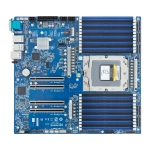
This bundle pairs the AMD EPYC 9254 with the Gigabyte MZ33-AR1 to form a balanced and versatile SP5 server platform. Optimized for general-purpose enterprise applications, mid-scale virtualization, and high-efficiency data processing. Delivers reliable 24-core performance, massive DDR5 memory bandwidth, and PCIe 5.0 scalability for modern, budget-optimized data center infrastructures.
Please submit a request, and we will gladly extend discounts on the pricing of our product sets.
P/N: 100-000000480
1 705€ (inc. VAT (Spain))
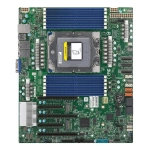
This bundle pairs the AMD EPYC 9254 with the Supermicro H13SSL-NT to form a balanced and high-throughput SP5 server platform. Optimized for enterprise-grade virtualization, high-speed storage management, and efficient data center workloads. Delivers reliable 24-core performance, 12-channel DDR5 memory support, and ultra-fast dual 10GbE connectivity for mission-critical business infrastructures.
Please submit a request, and we will gladly extend discounts on the pricing of our product sets.
P/N: 100-000000873
2 110€ (inc. VAT (Spain))
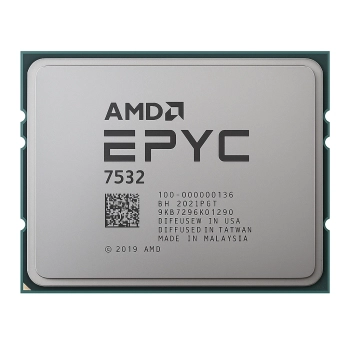
P/N: 100-000000136
373€ (inc. VAT (Spain))
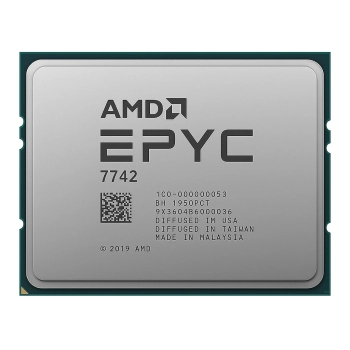
P/N: 100-000000053
675€ (inc. VAT (Spain))
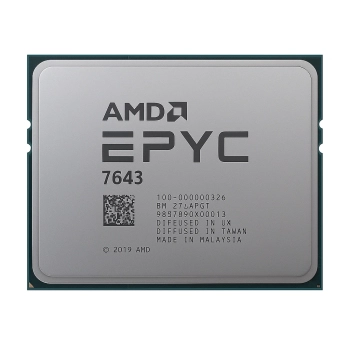
P/N: 100-000000326
1 335€ (inc. VAT (Spain))
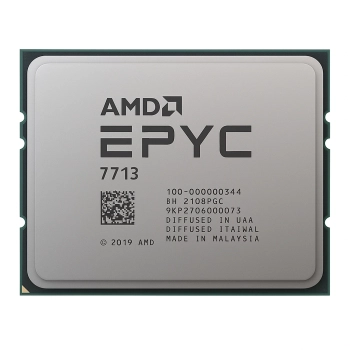
P/N: 100-000000344
1 300€ (inc. VAT (Spain))
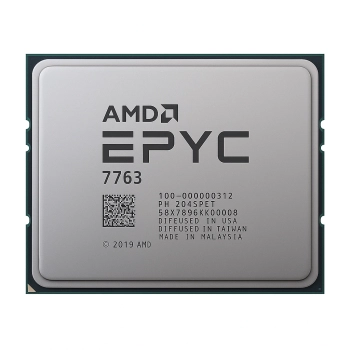
P/N: 100-000000312
1 241€ (inc. VAT (Spain))
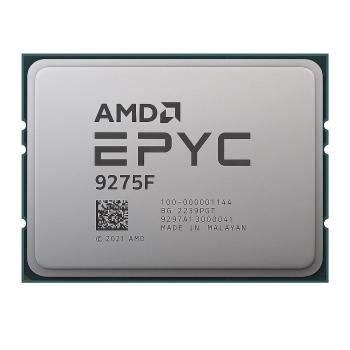
P/N: 100-000001144
3 615€ (inc. VAT (Spain))
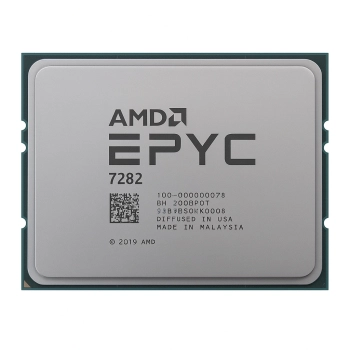
P/N: 100-000000078
293€ (inc. VAT (Spain))
Reviews
There are no reviews yet.