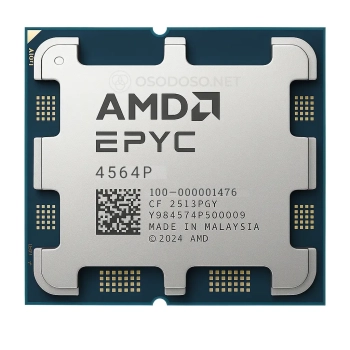
AMD EPYC 4564P 16c/32t 4.5GHz-5.7GHz 170W (100-000001476)
P/N: 100-000001476
813€ (inc. VAT (Spain))
New
P/N: 100-000001144
3 615€ (inc. VAT (Spain))
Delivery is made within 3-7 days
This is an estimated timeframe. Delivery times may vary depending on logistics and stock availability.
Warranty 2 year
The product is covered by the manufacturer’s standard warranty.
In stock
Guaranteed Safe Checkout:

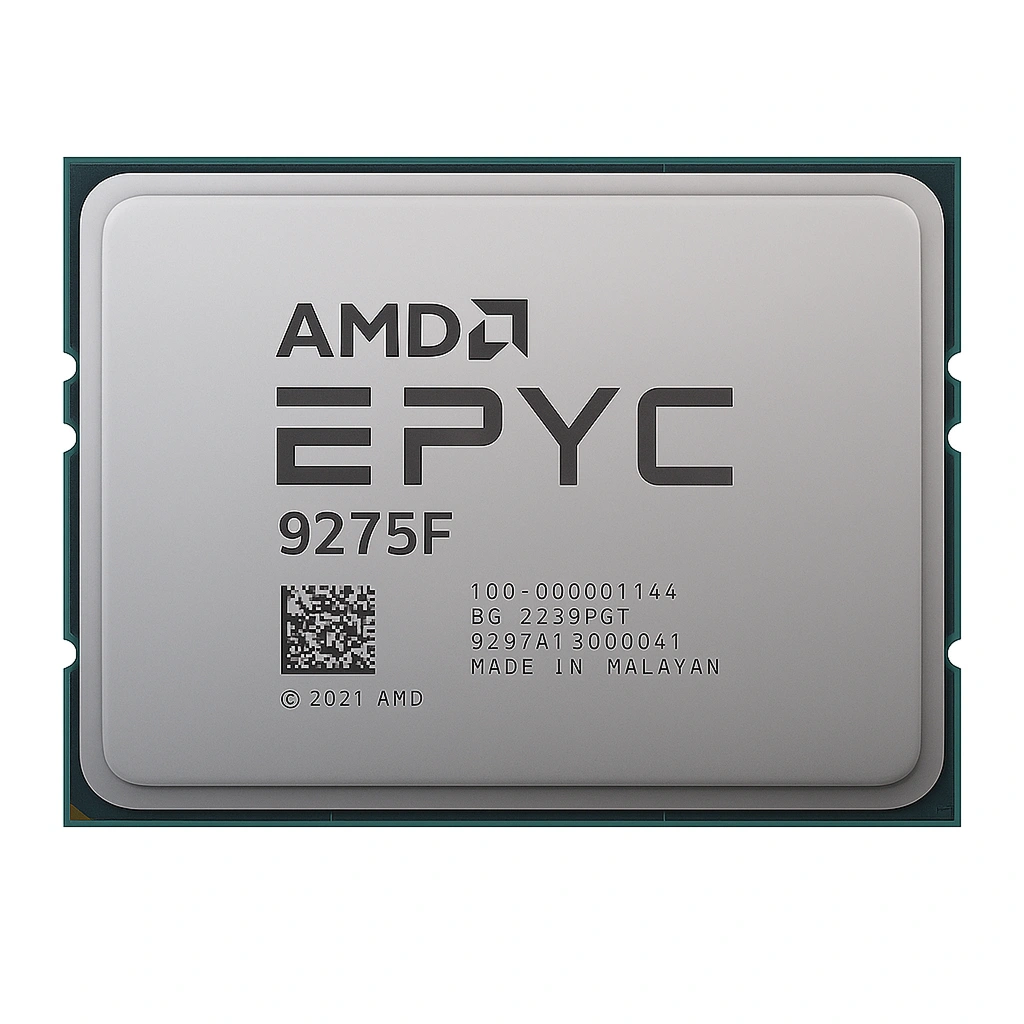
AMD EPYC 9275F processor with fast EU delivery and worldwide shipping. The best price in the European Union. Includes official warranty.
Our specialist will help you choose the right server components and ensure full compatibility with your system.
| Dimensions | 17 × 17 × 10 cm |
|---|---|
| Country of manufacture | Taiwan |
| Manufacturer's warranty (years) | 1 |
| Series | EPYC |
| Number of cores | 24 |
| Number of threads | 48 |
| Clock frequency (GHz) | 4.1 |
| Cache L3 (MB) | 256 |
| Process technology (nm) | 4 |
| Maximum Turbo Frequency (GHz) | 4.8 |
| Memory type | DDR5 |
| Maximum memory channels | 12 |
| Maximum memory frequency (MHz) | 6400 |
| Heat dissipation TDP (W) | 320 |
| PCI Express controller | PCIE 5.0 |
| Number of PCI Express lanes | 128 |
| Processors on a motherboard | 2 |
| Length (cm) | 17 |
| Width (cm) | 17 |
| Architecture | Zen 5 (Turin) |
| Socket | SP5 |
The AMD EPYC 9275F processor, built on the advanced Zen 5 (Turin) architecture, is engineered to meet the demanding needs of modern data centers and enterprise workloads. With a robust configuration of 24 cores and 48 threads, this processor excels in multi-threaded performance, making it ideal for virtualization, cloud computing, and data-intensive applications. The EPYC 9275F’s architecture allows for substantial parallel processing capabilities, ensuring that businesses can run multiple applications simultaneously without compromising performance.
Operating at a base frequency of 2.85 GHz and capable of reaching turbo frequencies of up to 3.7 GHz, the EPYC 9275F balances speed and efficiency. This processor is designed to handle high workloads while maintaining optimal performance levels, thanks to its impressive thermal design power (TDP) of 320 W. The substantial L3 cache of 256 MB enhances data retrieval speeds, reducing latency and ensuring that applications can access the data they need without delay, which is crucial for high-performance computing environments.
One of the standout features of the EPYC 9275F is its support for DDR5 memory, which provides higher bandwidth and improved power efficiency compared to previous generations. This support for cutting-edge memory technology allows for faster data processing and better overall system responsiveness, which is essential for applications requiring high memory throughput. Additionally, the SP5 socket ensures compatibility with a wide range of server motherboards, facilitating seamless integration into existing infrastructures.
The AMD EPYC 9275F is not only designed for performance but also for reliability and scalability. Its architecture is optimized for server environments, offering features such as enhanced security, error correction, and advanced power management, which are critical for mission-critical applications. This processor is a strategic choice for businesses looking to future-proof their operations while ensuring that they can scale their computing resources as demand grows.
For businesses across Europe, we offer fast delivery options and global shipping to ensure that you can access the AMD EPYC 9275F processor promptly. Additionally, our products come with an official warranty of 1 to 3 years, providing peace of mind and assurance of quality. Explore the potential of the AMD EPYC 9275F for your enterprise today—contact us for more information or to place your order.
Only logged in customers who have purchased this product may leave a review.
Within the AMD EPYC 9005 series, the 9275F model is positioned as a high-performance solution focused on tasks sensitive to clock speed and cache volume per core. Unlike standard models aimed at maximum core density, the 9275F offers an architectural balance that ensures peak performance in single-threaded and lightly threaded workloads. Below is a comparison of technical specifications with the closest competitors in the lineup.
| Processor Model | Cores / Threads | Base Frequency (GHz) | Turbo Boost (GHz) | L3 Cache (MB) | TDP (W) |
|---|---|---|---|---|---|
| AMD EPYC 9275F | 24 / 48 | 4.1 | 4.8 | 256 | 320 |
| AMD EPYC 9175F | 16 / 32 | 4.2 | 5 | 512 | 320 |
| AMD EPYC 9375F | 32 / 64 | 3.8 | 4.8 | 320 | 320 |
| AMD EPYC 9475F | 48 / 96 | 3.65 | 4.8 | 256 | 400 |
| AMD EPYC 9575F | 64 / 128 | 3.3 | 5 | 256 | 400 |
| AMD EPYC 9255 | 24 / 48 | 3.2 | 4.3 | 128 | 200 |
| AMD EPYC 9355 | 32 / 64 | 3.55 | 4.4 | 256 | 280 |
| AMD EPYC 9335 | 32 / 64 | 3.0 | 4.4 | 128 | 210 |
| AMD EPYC 9135 | 16 / 32 | 3.65 | 4.3 | 64 | 200 |
| AMD EPYC 9455 | 48 / 96 | 3.15 | 4.4 | 256 | 300 |
Based on the technical specifications, the AMD EPYC 9275F demonstrates a clear advantage in the following aspects:
The AMD EPYC 9275F is the optimal choice for infrastructures where per-core performance is critical, rather than total core count. The processor prevails over competitors through a combination of high frequencies and large cache volume, occupying a unique niche between 16-core high-frequency solutions and multi-core chips of the standard series.
This processor is optimized for workloads requiring maximum per-core performance rather than a high core count. It is ideally suited for Database Management Systems (DBMS), High-Frequency Trading (HFT), Electronic Design Automation (EDA), and any applications where high clock speed and fast system response are critical.
The “F” suffix indicates that the processor belongs to the “High Frequency” series. Unlike standard models focused on energy efficiency or core density, this version is tuned to maintain the highest possible clock speeds (Base 4.1 GHz / Boost 4.8 GHz) to achieve peak performance.
Yes, this is one of the key advantages of this model. Many enterprise software products (e.g., Oracle databases or SQL Server) are licensed by the number of physical cores. By using 24 high-performance cores instead of 64 or 96 standard ones, you get the necessary computing power while significantly reducing license acquisition costs.
The processor is equipped with 256 MB of Level 3 (L3) cache. With 24 cores, this provides an impressive capacity — over 10 MB of cache per physical core. This ratio significantly accelerates data processing and reduces memory latency, which is critical for complex calculations.
A TDP (Thermal Design Power) rating of 320W means the processor generates a significant amount of heat to maintain high frequencies. Stable operation requires the use of professional server cooling systems designed for high thermal loads, and a chassis with optimized airflow.
Yes, the processor installs into the SP5 socket (LGA 6096). However, before installation in existing server platforms, it is necessary to ensure that the motherboard BIOS is updated to a version that supports the Zen 5 architecture (EPYC 9005 series).
The EPYC 9275F supports 12 channels of DDR5 standard RAM. This ensures colossal memory bandwidth, necessary so that the high-speed cores do not idle waiting for data. RDIMM modules with Error Correction Code (ECC) are supported.
The lower core count in the 9275F is a conscious engineering decision. This allowed for a significant increase in the clock speed of each core and allocation of more resources (power and cache) to them, avoiding the overheating that would occur if attempting to clock 96 or 128 cores to such frequencies.
Yes, the EPYC 9275F provides full support for the PCIe 5.0 interface, allowing the use of the most modern NVMe drives, high-bandwidth network cards, and computational accelerators without data transfer speed limitations.
Fast and reliable delivery across the European Union
Estimated transit time: 3–7 days from order confirmation. Worldwide shipping is available for customers outside the EU.
All orders are processed within 24 hours after confirmation. Tracking information is provided as soon as the parcel leaves our logistics center.
Multiple Secure Payment Methods
We accept: Visa, MasterCard, PayPal, Bank Transfer, Klarna, Stripe, Revolut Pay, Google Pay, Apple Pay, and USDT (TRC20) cryptocurrency payments.
All transactions are encrypted and processed via certified payment gateways for your security.
Additional Notes
P/N: 100-000001144
3 615€ (inc. VAT (Spain))
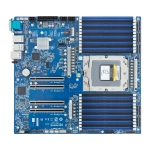
This bundle pairs the AMD EPYC 9275F with the Gigabyte MZ33-AR1 to form a high-frequency SP5 server platform. Engineered for workloads that demand peak per-core performance and ultra-low latency, such as Electronic Design Automation (EDA), high-frequency trading (HFT), and relational database management. Delivers exceptional 24-core high-speed throughput, massive DDR5 memory bandwidth, and PCIe 5.0 scalability for performance-critical professional environments.
Please submit a request, and we will gladly extend discounts on the pricing of our product sets.
P/N: 100-000001144
3 615€ (inc. VAT (Spain))
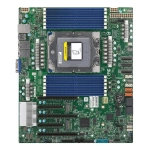
This bundle pairs the AMD EPYC 9275F with the Supermicro H13SSL-NT to form a specialized, high-frequency SP5 server platform. Optimized for workloads requiring peak per-core performance and ultra-low latency, such as Electronic Design Automation (EDA), high-frequency trading (HFT), and intensive relational database management. Delivers a powerful 24-core high-speed compute engine based on Zen 5 architecture, 12-channel DDR5 memory support, and ultra-fast dual 10GbE connectivity for performance-critical enterprise applications.
Please submit a request, and we will gladly extend discounts on the pricing of our product sets.
P/N: 100-000001476
813€ (inc. VAT (Spain))
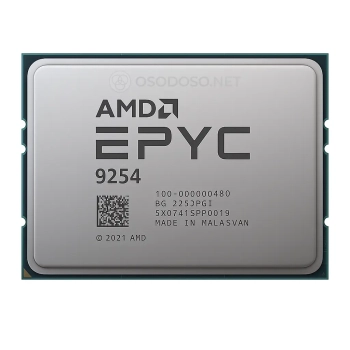
P/N: 100-000000480
1 705€ (inc. VAT (Spain))
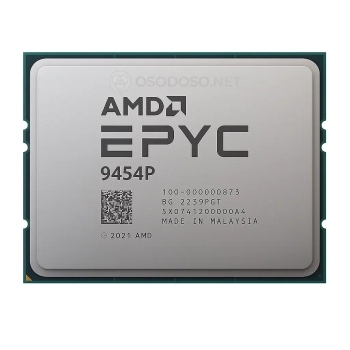
P/N: 100-000000873
2 110€ (inc. VAT (Spain))
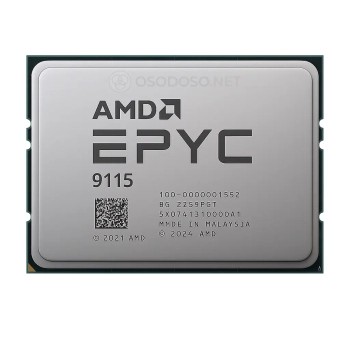
P/N: 100-000001552
1 091€ (inc. VAT (Spain))
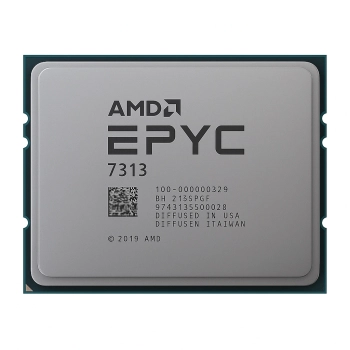
P/N: 100-000000329
686€ (inc. VAT (Spain))
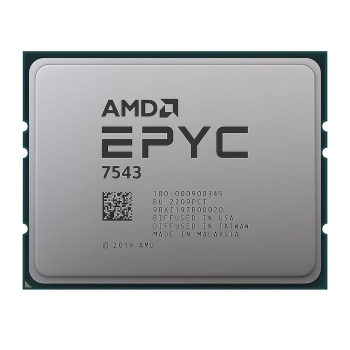
P/N: 100-000000345
860€ (inc. VAT (Spain))
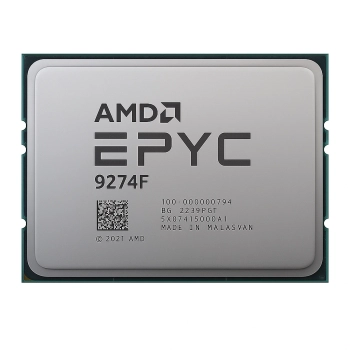
P/N: 100-000000794
2 516€ (inc. VAT (Spain))
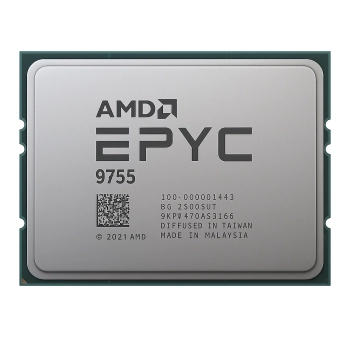
P/N: 100-000001443
5 179€ (inc. VAT (Spain))
Reviews
There are no reviews yet.