AMD EPYC 9454P 48c/96t 2.75GHz-3.8GHz 290W (100-000000873)
P/N: 100-000000873
2 110€ (inc. VAT (Spain))
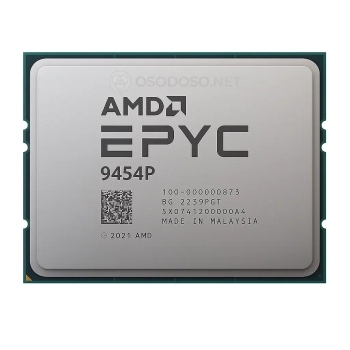
New
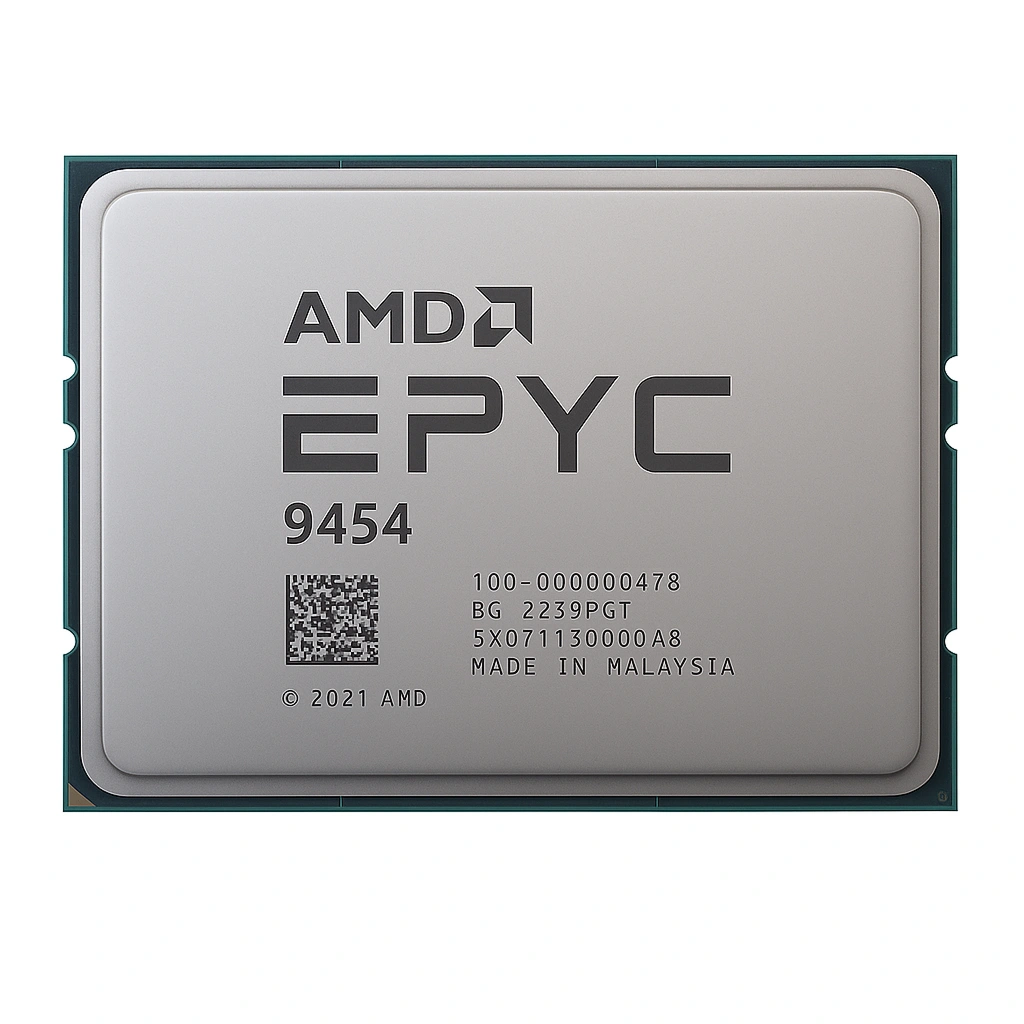
P/N: 100-000000478
2 168€ (inc. VAT (Spain))
Delivery is made within 3-7 days
This is an estimated timeframe. Delivery times may vary depending on logistics and stock availability.
Warranty 2 year
The product is covered by the manufacturer’s standard warranty.
In stock
Guaranteed Safe Checkout:

AMD EPYC 9454 48-core high-performance CPU with fast EU delivery and worldwide shipping. Official warranty included.
Our specialist will help you choose the right server components and ensure full compatibility with your system.
| Dimensions | 17 × 17 × 10 cm |
|---|---|
| Country of manufacture | Taiwan |
| Manufacturer's warranty (years) | 1 |
| Series | EPYC |
| Number of cores | 48 |
| Number of threads | 96 |
| Clock frequency (GHz) | 2.75 |
| Cache L3 (MB) | 256 |
| Cache L2 (MB) | 1 |
| Process technology (nm) | 5 |
| Maximum Turbo Frequency (GHz) | 3.8 |
| Memory type | DDR5 |
| Maximum memory channels | 12 |
| Maximum memory frequency (MHz) | 4800 |
| Heat dissipation TDP (W) | 256 |
| PCI Express controller | PCIE 5.0 |
| Number of PCI Express lanes | 128 |
| Processors on a motherboard | 2 |
| Length (cm) | 17 |
| Width (cm) | 17 |
| Architecture | Zen 4 |
| Socket | SP5 |
The AMD EPYC 9454 is a 48-core, 96-thread server processor built on the Zen 4 “Genoa” architecture, targeting organizations that require a combination of high parallel compute density, large memory bandwidth and broad I/O scalability. Positioned in the upper-middle of the EPYC 9004 lineup, the 9454 offers significantly more throughput than 24–32 core Genoa models while maintaining better power efficiency and thermal characteristics than the top-end 96-core SKUs. Its 2.75 GHz base frequency, 3.80 GHz boost frequency and 256 MB of L3 cache make it ideal for complex, multi-tenant environments, virtualization clusters and data-intensive enterprise workloads.
Like the rest of the Genoa family, the EPYC 9454 uses AMD’s SP5 platform, introducing key improvements over Milan, including new Zen 4 cores, 12-channel DDR5 memory, PCIe 5.0 connectivity, CXL 1.1 support and enhanced energy efficiency. These changes substantially improve not only raw compute performance but also system responsiveness, memory scaling behavior and accelerator compatibility. The processor integrates multiple CCDs (Core Complex Dies), each featuring Zen 4 cores with updated branch prediction, improved front-end throughput and larger schedulers, enhancing both single-thread performance and highly parallel workloads.
The 256 MB of L3 cache ensures stable performance under multi-tenant, mixed-load environments, where many threads across many VMs or containers compete for shared resources. Zen 4’s cache improvements also reduce latency penalties and improve consistency in workloads that rely on large working sets such as indexing, analytical queries, distributed caching layers and certain HPC algorithms.
The EPYC 9454 excels in scenarios where a high number of strong cores drives overall performance. It is particularly well-suited for:
One of the defining strengths of the EPYC 9454 is its access to Genoa’s 12-channel DDR5 memory subsystem. This architectural upgrade dramatically increases memory throughput compared to previous-generation platforms. Systems equipped with 9454 processors can support extremely large memory footprints and deliver consistent bandwidth even under heavy multi-threaded access patterns, making them ideal for in-memory analytics, complex joins and caching-heavy application layers.
In practical deployment, the additional memory channels allow organizations to use higher-capacity DIMMs without sacrificing performance. This is particularly important for cloud workloads, data warehousing, distributed caching and situations where numerous VMs or containers compete for memory simultaneously.
The EPYC 9454 supports:
The extensive I/O capability allows administrators to build balanced high-performance nodes that combine compute, networking, storage and accelerators without bottlenecks. PCIe 5.0 enables next-generation NVMe SSDs, 200–400 GbE network adapters, DPUs, SmartNICs and FPGA accelerators to run at full bandwidth.
Within the Genoa stack, the 9454 occupies a critical middle-ground:
These characteristics make it ideal for organizations standardizing on a single CPU model across a broad range of compute nodes while avoiding the cost and complexity associated with the largest EPYC processors.
With a 290 W TDP (depending on configuration), the EPYC 9454 offers a strong balance between performance and power consumption. Compared to higher-end Genoa processors, it reduces cooling requirements, lowers operational costs and enables tighter rack densities without sacrificing the ability to run complex enterprise workloads. It is often selected for fleets of general-purpose compute nodes in both cloud and on-prem datacenters.
The AMD EPYC 9454 is a powerful and versatile 48-core server processor that provides exceptional throughput, high memory bandwidth and broad platform scalability. It is ideally suited for large virtualization clusters, enterprise databases, cloud-native application stacks, analytics platforms and balanced HPC workloads. By combining Zen 4 performance with a high but manageable core count and the full capabilities of the SP5 platform, the EPYC 9454 stands out as an efficient, scalable and long-lived choice for modern datacenter infrastructure.
Only logged in customers who have purchased this product may leave a review.
In the AMD EPYC 9004 lineup, the 9454 model occupies a unique “golden mean” position, offering a balance between multi-threaded performance and energy efficiency. With 48 computing cores, this processor represents an ideal solution for virtualization and cloud environments where high resource density is required while maintaining strict thermal requirements. Below is a detailed comparison of the technical specifications of this model with its nine closest competitors in the series present in this segment.
| Processor Model | Cores / Threads | Base Frequency (GHz) | Turbo Boost (GHz) | L3 Cache (MB) | TDP (W) |
|---|---|---|---|---|---|
| AMD EPYC 9454 | 48 / 96 | 2.75 | 3.8 | 256 | 256 |
| AMD EPYC 9124 | 16 / 32 | 3.0 | 3.7 | 64 | 200 |
| AMD EPYC 9174F | 16 / 32 | 4.1 | 4.4 | 256 | 320 |
| AMD EPYC 9254 | 24 / 48 | 2.9 | 4.15 | 128 | 200 |
| AMD EPYC 9274F | 24 / 48 | 4.05 | 4.3 | 256 | 320 |
| AMD EPYC 9334 | 32 / 64 | 2.7 | 3.9 | 128 | 210 |
| AMD EPYC 9354 | 32 / 64 | 3.25 | 3.8 | 256 | 280 |
| AMD EPYC 9374F | 32 / 64 | 3.85 | 4.3 | 256 | 320 |
| AMD EPYC 9554 | 64 / 128 | 3.1 | 3.75 | 256 | 360 |
| AMD EPYC 9654 | 96 / 192 | 2.4 | 3.7 | 384 | 360 |
The AMD EPYC 9454 processor demonstrates superior performance in benchmarking, especially when comparing “performance per watt” and “cache per core” ratios. Data analysis reveals the following key advantages:
The AMD EPYC 9454 is one of the most balanced solutions in the modern lineup. It surpasses lower-end models in computing density and outperforms senior flagships in energy efficiency and cache availability per core. For infrastructure tasks and mixed workloads in the considered segment, this processor offers the optimal combination of performance and operational characteristics.
This is a server processor based on the Zen 4 architecture, featuring 48 physical cores and 96 threads. It operates at a base frequency of 2.75 GHz with a boost clock of up to 3.8 GHz. A key feature is the massive 256 MB L3 cache, which ensures high data processing speeds.
Thanks to its combination of 48 cores and optimized power efficiency, the 9454 model represents the “sweet spot” for virtualization, cloud computing, and hyper-converged infrastructure (HCI). It is ideal for servers requiring high VM density per socket without imposing extreme cooling requirements.
This processor is designed for the SP5 socket (LGA 6096). As this is a next-generation platform, the processor is not compatible with previous generation motherboards (Socket SP3). When building or upgrading a server, ensure that the selected motherboard supports the EPYC 9004 series.
The EPYC 9454 memory controller supports 12 channels of DDR5 memory. This provides the massive bandwidth necessary to feed data to all 48 cores. It supports RDIMM and 3DS RDIMM modules with Error Correction Code (ECC), which is critical for server system stability.
The processor has a nominal TDP of 256W. This is a highly efficient figure for a 48-core solution, especially when compared to flagship models that consume 360–400W. However, stable operation under load still requires a professional server cooling system capable of handling this thermal output.
Yes, the EPYC 9454 supports PCIe 5.0, providing up to 128 I/O lanes. This allows for the use of cutting-edge NVMe storage, high-speed network adapters (100–400 Gbps), and the latest computational accelerators without bus bandwidth bottlenecks.
“F” series models are optimized for maximum frequency but often have fewer cores or higher power consumption. The EPYC 9454 excels in scenarios where multi-threading and energy efficiency are paramount. It offers more cores (48 vs. 32 on the 9374F) at a significantly lower TDP (256W vs. 320W), helping to reduce operational costs for electricity and cooling.
Yes, the Zen 4 architecture, upon which the EPYC 9454 is built, includes full support for AVX-512 instructions. This provides a significant performance boost in Artificial Intelligence (AI), Machine Learning (ML), and High-Performance Computing (HPC) tasks, enabling more efficient processing of complex vector instructions compared to previous generations.
Yes, the AMD EPYC 9454 fully supports dual-processor (2P) configurations. This allows you to build a server with 96 physical cores and 192 threads, while also doubling the available memory capacity and PCIe lanes, creating a powerful platform for the most demanding enterprise workloads.
Fast and reliable delivery across the European Union
Estimated transit time: 3–7 days from order confirmation. Worldwide shipping is available for customers outside the EU.
All orders are processed within 24 hours after confirmation. Tracking information is provided as soon as the parcel leaves our logistics center.
Multiple Secure Payment Methods
We accept: Visa, MasterCard, PayPal, Bank Transfer, Klarna, Stripe, Revolut Pay, Google Pay, Apple Pay, and USDT (TRC20) cryptocurrency payments.
All transactions are encrypted and processed via certified payment gateways for your security.
Additional Notes
P/N: 100-000000478
2 168€ (inc. VAT (Spain))
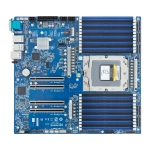
This bundle pairs the AMD EPYC 9454 with the Gigabyte MZ33-AR1 to form a versatile and high-performance SP5 server platform. Optimized for multi-threaded enterprise applications, dense virtualization, and high-throughput data analysis. Delivers efficient 48-core performance, massive DDR5 memory bandwidth, and PCIe 5.0 scalability for modern, demanding data center infrastructures.
Please submit a request, and we will gladly extend discounts on the pricing of our product sets.
P/N: 100-000000478
2 168€ (inc. VAT (Spain))
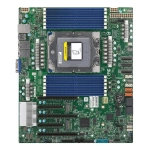
This bundle pairs the AMD EPYC 9454 with the Supermicro H13SSL-NT to form a balanced and high-efficiency SP5 server platform. Optimized for multi-tenant virtualization, massive cloud hosting, and high-throughput data processing. Delivers a robust 48-core foundation, 12-channel DDR5 memory support, and ultra-fast dual 10GbE networking for mission-critical enterprise environments.
Please submit a request, and we will gladly extend discounts on the pricing of our product sets.
P/N: 100-000000873
2 110€ (inc. VAT (Spain))
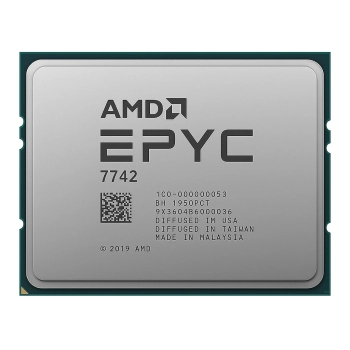
P/N: 100-000000053
675€ (inc. VAT (Spain))
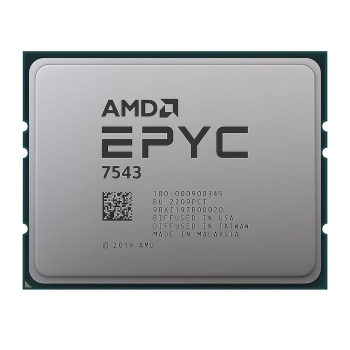
P/N: 100-000000345
860€ (inc. VAT (Spain))
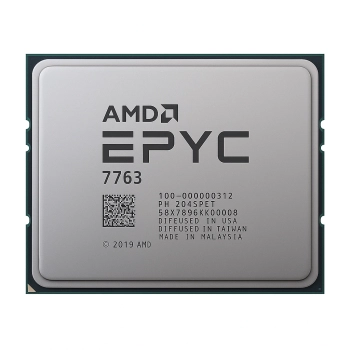
P/N: 100-000000312
1 241€ (inc. VAT (Spain))
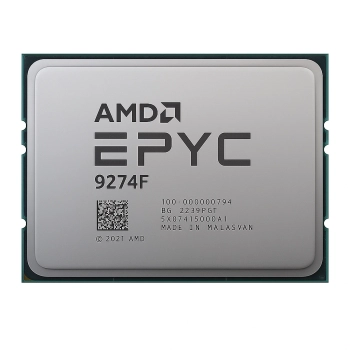
P/N: 100-000000794
2 516€ (inc. VAT (Spain))
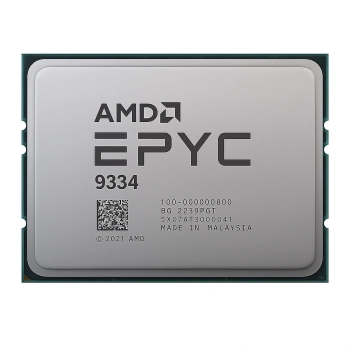
P/N: 100-000000800
2 110€ (inc. VAT (Spain))
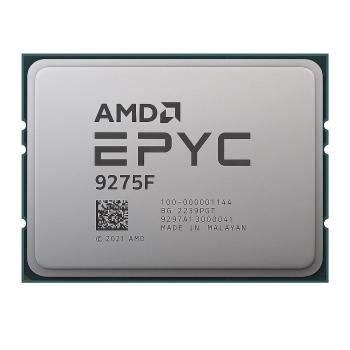
P/N: 100-000001144
3 615€ (inc. VAT (Spain))
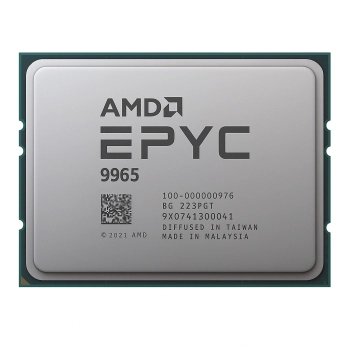
P/N: 100-000000976
5 931€ (inc. VAT (Spain))
Reviews
There are no reviews yet.