AMD EPYC 4564P 16c/32t 4.5GHz-5.7GHz 170W (100-000001476)
P/N: 100-000001476
813€ (inc. VAT (Spain))
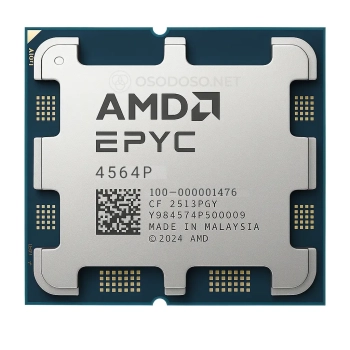
New
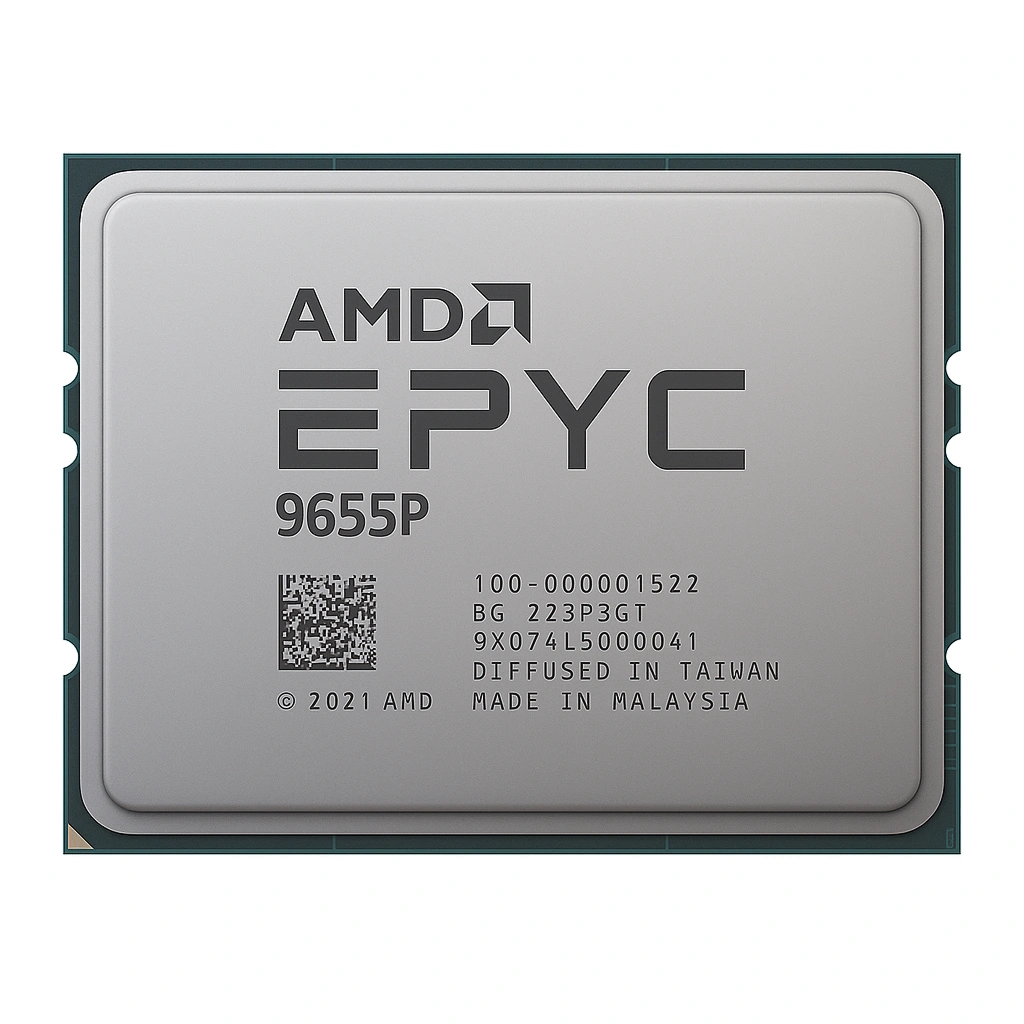
P/N: 100-000001522
4 137€ (inc. VAT (Spain))
Delivery is made within 3-7 days
This is an estimated timeframe. Delivery times may vary depending on logistics and stock availability.
Warranty 2 year
The product is covered by the manufacturer’s standard warranty.
In stock
Guaranteed Safe Checkout:

AMD EPYC 9655P processor with fast EU delivery and worldwide shipping. The best price in the European Union. Includes official warranty.
Our specialist will help you choose the right server components and ensure full compatibility with your system.
| Dimensions | 17 × 17 × 10 cm |
|---|---|
| Country of manufacture | Taiwan |
| Manufacturer's warranty (years) | 1 |
| Series | EPYC |
| Number of cores | 96 |
| Number of threads | 192 |
| Clock frequency (GHz) | 2.6 |
| Cache L3 (MB) | 384 |
| Process technology (nm) | 4 |
| Maximum Turbo Frequency (GHz) | 4.5 |
| Memory type | DDR5 |
| Maximum memory channels | 12 |
| Maximum memory frequency (MHz) | 6400 |
| Heat dissipation TDP (W) | 400 |
| PCI Express controller | PCIE 5.0 |
| Number of PCI Express lanes | 128 |
| Processors on a motherboard | 1 |
| Length (cm) | 17 |
| Width (cm) | 17 |
| Architecture | Zen 5 (Turin) |
| Socket | SP5 |
The AMD EPYC 9655P is a cutting-edge server processor that leverages the advanced Zen 5 (Turin) architecture, delivering outstanding performance and efficiency for demanding workloads. With an impressive core count of 96 and support for 192 threads, this processor is engineered to excel in multi-threaded environments, making it an ideal choice for data centers, cloud computing, and enterprise applications.
Operating at a base frequency of Sun Jun 01 2025 21:15:00 GMT+0300 (Moscow Standard Time) GHz, the EPYC 9655P is designed to handle intensive tasks with ease. It also features a turbo frequency reaching Mon Feb 03 2025 21:15:00 GMT+0300 (Moscow Standard Time) GHz, allowing it to dynamically adjust performance based on workload demands. This capability ensures that enterprises can achieve high levels of performance while maintaining energy efficiency, crucial for optimizing operational costs in large-scale deployments.
With a thermal design power (TDP) of 360 W, the EPYC 9655P balances power consumption and performance, providing reliability and stability in critical server environments. The extensive 384 MB of L3 cache further enhances data retrieval speeds, significantly improving application performance and responsiveness in memory-intensive applications.
This processor supports DDR5 memory, enabling higher bandwidth and improved data transfer rates, which are essential for applications requiring rapid access to large datasets. The combination of high core count, substantial cache, and advanced memory support positions the EPYC 9655P as a powerful solution for enterprises looking to scale their operations efficiently.
In addition to its technical prowess, the AMD EPYC 9655P is backed by a commitment to business reliability, including fast delivery across Europe and global shipping options. Customers can also enjoy peace of mind with an official warranty ranging from 1 to 3 years, ensuring long-term support for critical infrastructure.
Experience the next level of server performance with the AMD EPYC 9655P. For inquiries or to make a purchase, please contact us today.
Only logged in customers who have purchased this product may leave a review.
The AMD EPYC 9655P is a high-core, throughput-oriented server CPU designed to maximize
compute density and sustained parallel performance within a single-socket platform.
With 96 cores and 192 threads, it targets environments where workloads scale efficiently across
many threads and where consolidating compute into fewer physical nodes simplifies deployment and
operations.
Within the EPYC 9005 family, the 9655P represents a deliberate shift away from frequency
optimization toward core density and aggregate throughput. The “P” designation limits the
processor to single-socket configurations, but this is not a drawback in its intended use cases.
Instead, it allows architects to avoid dual-socket complexity while still achieving very high
levels of parallel compute.
From a benchmarking perspective, the EPYC 9655P delivers strong multi-thread performance that
approaches the upper range of the lineup, while maintaining adequate single-thread capability
for coordination and control-plane tasks. It is designed to remain efficient under sustained
full-core utilization rather than chasing peak per-core frequency.
| CPU | Cores / Threads | PassMark CPU Mark | Single-Thread Score |
|---|---|---|---|
| EPYC 9555 | 64 / 128 | ~185,000 | ~4,200 |
| EPYC 9575F | 64 / 128 | ~197,000 | ~4,150 |
| EPYC 9655P | 96 / 192 | ~210,000 | ~4,100 |
| EPYC 9755 | 128 / 256 | ~235,000 | ~4,050 |
Moving from 64-core to 96-core configurations yields a noticeable increase in aggregate
throughput, though the scaling is no longer linear. This reflects real-world limits such as
memory bandwidth, scheduling overhead, and diminishing returns in workloads that are not
perfectly parallel.
Compared to frequency-optimized SKUs, the EPYC 9655P sacrifices some per-core responsiveness in
exchange for higher sustained throughput under full load. In virtualization-heavy, batch-
oriented, and containerized environments, this trade-off is often favorable, as total work
completed per unit time becomes the dominant metric.
| CPU | Architecture | Cores / Threads | PassMark CPU Mark | Single-Thread Score |
|---|---|---|---|---|
| EPYC 7773X | Zen 3 | 64 / 128 | ~150,000 | ~3,000 |
| EPYC 9654 | Zen 4 | 96 / 192 | ~185,000 | ~3,700 |
| EPYC 9655P | Zen 5 | 96 / 192 | ~210,000 | ~4,100 |
Zen 5 brings a clear improvement in both aggregate throughput and per-core efficiency at high
core counts. Compared to Zen 4, the EPYC 9655P benefits from higher IPC and better sustained
execution under heavy parallel load.
For operators upgrading from Zen 3 or Zen 4 high-core platforms, the improvement is visible not
only in benchmark scores but also in reduced execution time for large batch jobs and higher VM
density per node.
| CPU | Indicative RRP (€) | PassMark CPU Mark | Performance per € |
|---|---|---|---|
| EPYC 9555 | 3,938 | ~185,000 | ~47.0 |
| EPYC 9575F | 4,114 | ~197,000 | ~47.9 |
| EPYC 9655P | 4,055 | ~210,000 | ~51.8 |
Multi-thread metrics describe sustained throughput under efficient parallel scaling.
Single-thread metrics influence coordination efficiency, latency, and tail behavior.
Performance-per-euro ratios support capacity planning but do not account for licensing,
power, or cooling constraints.
At high core counts, memory bandwidth and I/O topology frequently become the dominant
bottlenecks rather than raw CPU capability.
The AMD EPYC 9655P is well suited for highly parallel, throughput-driven workloads that
benefit from consolidating compute into a single socket. It is a strong choice for dense
virtualization, container platforms, batch analytics, CPU rendering, and HPC workloads
that scale well across many threads.
For latency-sensitive or license-constrained applications, frequency-optimized or lower-
core SKUs may deliver better effective performance. For extreme throughput requirements,
higher-core models can offer additional gains at higher cost. The EPYC 9655P occupies a
practical middle ground, offering excellent performance density, strong efficiency, and
reduced platform complexity.
This processor is designed for workloads that scale efficiently across a very large number of threads. Typical scenarios include dense virtualization, container platforms, batch analytics, CPU-based rendering, scientific workloads, and other throughput-oriented tasks where total work completed per unit time is more important than per-core latency.
The “P” designation indicates single-socket operation only. In practice, this is often an advantage rather than a limitation. It allows you to achieve very high core density without the complexity of dual-socket NUMA topologies, reduces platform cost, and simplifies tuning, licensing, and operational management.
Compared to 64-core CPUs, the 9655P offers significantly higher aggregate throughput, but scaling is no longer linear. The benefit is strongest in workloads that keep most cores busy for long periods. In mixed or latency-sensitive workloads, the advantage over 64-core models may be smaller due to coordination overhead and memory contention.
Yes. It is particularly effective for high VM density when vCPU oversubscription is managed carefully and memory channels are fully populated. A single-socket 96-core system can often replace multiple lower-core servers while maintaining predictable performance, provided that memory and I/O are not bottlenecks.
Memory configuration is critical. All memory channels should be populated evenly to avoid bandwidth starvation. At this core count, insufficient memory bandwidth or unbalanced DIMM placement can limit performance more than the CPU itself, especially in virtualization and data-processing workloads.
Yes. Container platforms benefit from high core counts when workloads are parallel and well-isolated. The 9655P allows dense pod placement and high overall throughput, particularly in environments where containers run CPU-bound services rather than latency-critical frontends.
It is designed for continuous, high-utilization operation. Performance is stable under long-running parallel workloads as long as cooling and power delivery are sufficient. Unlike frequency-focused SKUs, it prioritizes sustained throughput rather than short-term boost behavior.
It performs well in HPC workloads that scale efficiently across many cores and are not limited by memory latency or I/O. For embarrassingly parallel tasks, it is a strong option. For workloads with heavy synchronization or serial phases, frequency-optimized or lower-core models may deliver better time-to-solution.
A single EPYC 9655P system can often replace a dual-socket configuration with fewer total cores while offering simpler NUMA behavior, lower platform cost, and reduced power consumption. However, dual-socket systems may still be preferable when memory capacity, PCIe expansion, or redundancy requirements dominate.
Despite being single-socket, EPYC 9655P operates at a high power envelope due to its core density. Proper airflow, high-quality heatsinks, and adequate rack-level cooling are required to sustain expected performance. Power delivery on the motherboard must also be designed for sustained load.
It is not ideal for workloads dominated by single-thread performance, strict per-core licensing models, or scenarios where performance drops sharply beyond a moderate number of threads. In such cases, frequency-optimized or lower-core SKUs may provide better effective performance.
Choose the 9655P when your workloads scale well with additional threads, you want to maximize compute density in a single socket, and you prefer simpler system topology over dual-socket designs. If latency sensitivity or licensing cost dominates, other EPYC SKUs may be more appropriate.
Fast and reliable delivery across the European Union
Estimated transit time: 3–7 days from order confirmation. Worldwide shipping is available for customers outside the EU.
All orders are processed within 24 hours after confirmation. Tracking information is provided as soon as the parcel leaves our logistics center.
Multiple Secure Payment Methods
We accept: Visa, MasterCard, PayPal, Bank Transfer, Klarna, Stripe, Revolut Pay, Google Pay, Apple Pay, and USDT (TRC20) cryptocurrency payments.
All transactions are encrypted and processed via certified payment gateways for your security.
Additional Notes
P/N: 100-000001476
813€ (inc. VAT (Spain))
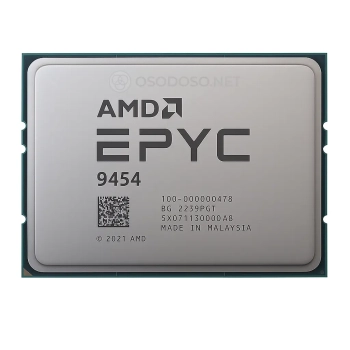
P/N: 100-000000478
2 168€ (inc. VAT (Spain))
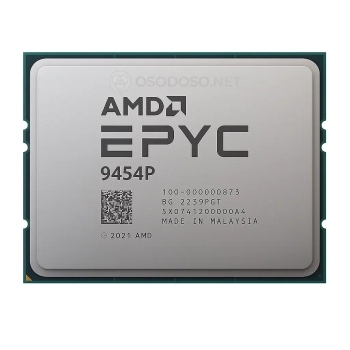
P/N: 100-000000873
2 110€ (inc. VAT (Spain))
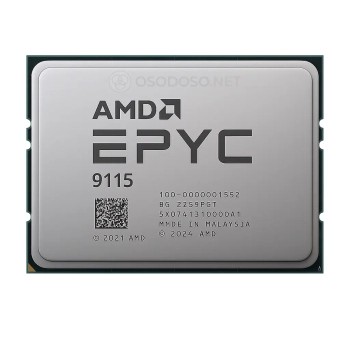
P/N: 100-000001552
1 091€ (inc. VAT (Spain))
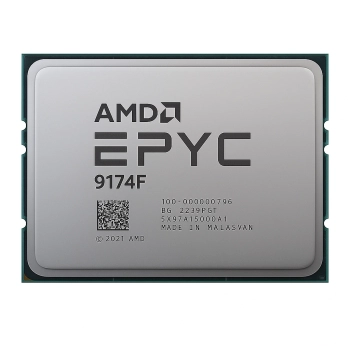
P/N: 100-000000796
2 341€ (inc. VAT (Spain))
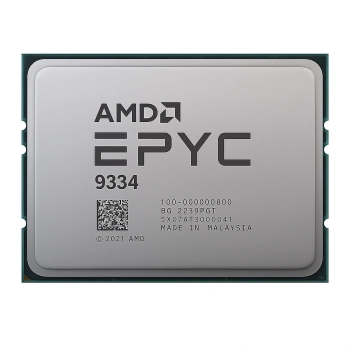
P/N: 100-000000800
2 110€ (inc. VAT (Spain))
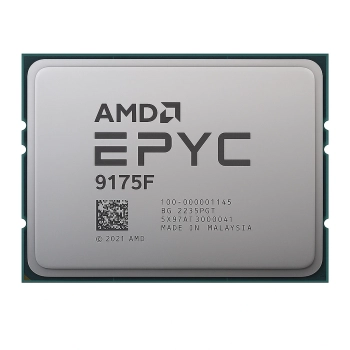
P/N: 100-000001145
3 674€ (inc. VAT (Spain))
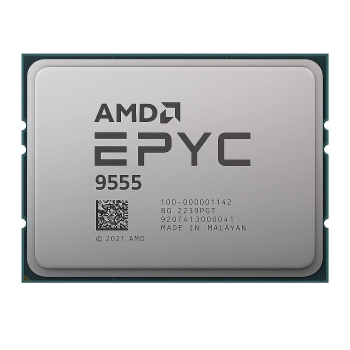
P/N: 100-000001142
4 253€ (inc. VAT (Spain))
Reviews
There are no reviews yet.